That character you sketched is more than just a drawing—it could be your company's most valuable asset. But if it isn't protected, it's also your biggest liability. Trademarking a character is what turns a creative idea into a defensible, revenue-generating piece of intellectual property. It secures its role as a unique symbol of your brand in the marketplace.
Why Trademarking Your Character Is a Critical Business Move
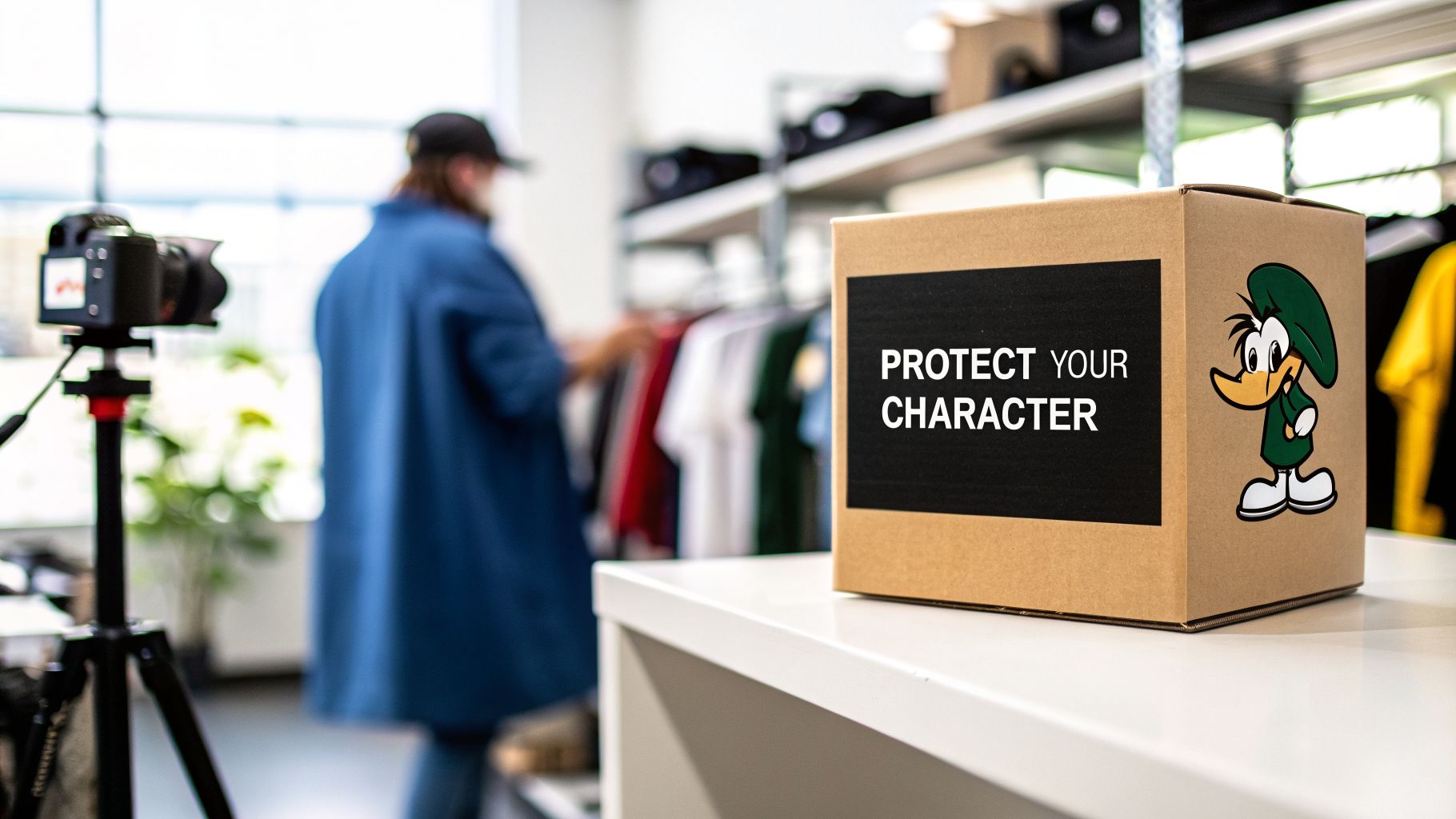
Here's a scenario we see all the time: an e-commerce brand creates an adorable mascot that goes viral. Sales spike, and the character becomes the face of the company. Before long, copycats start producing merchandise with look-alike characters, confusing customers and diluting the brand's identity. The founder loses sales and, more importantly, their unique position in the market.
This isn't a hypothetical. It happens to founders who underestimate the power of their creative assets. Trademarking a character is the strategic move that prevents this kind of brand erosion by giving you the legal right to stop others from using a confusingly similar character on related goods or services.
Trademark vs. Copyright: A Common Confusion
Many creators think copyright alone is enough. While it's essential, copyright and trademark serve two distinct, complementary functions. Understanding the difference is fundamental to building a complete intellectual property shield.
- Copyright protects the artistic expression of the character—the specific drawing, animation, or sculpture itself. It stops someone from making unauthorized copies of your original art.
- Trademark, on the other hand, protects the character's role as a brand identifier. It secures the name and likeness as a symbol that tells consumers a product or service comes from you.
Pro Tip: A complete IP strategy for a character almost always involves securing both copyright and trademark. Think of it this way: copyright protects the art, while trademark protects its use on products and in commerce.
More Than a Legal Chore: A Foundational Growth Strategy
Viewing the trademark process as a mere legal chore is a mistake. It’s a foundational strategy for brand growth and monetization. A registered trademark turns your character into a tangible business asset, opening doors for licensing deals, merchandise lines, and franchise opportunities that can create revenue streams far beyond your core business.
Actionable Tip: Don't wait until your character is famous to start the process. Securing your rights early is far less expensive and complicated than trying to reclaim them after a competitor has already entered the market. The moment your character starts acting as a symbol for your brand, it's time to consider trademark protection.
Ultimately, trademarking your character is an investment in your brand’s future, ensuring the equity you build remains yours alone. If you're ready to secure your creative assets, contact us to see how we can help.
Is Your Character Eligible for a Trademark?
Before you spend a single dollar trying to trademark your character, you need to ask a blunt question: is it even eligible?
Not every creative design can be legally protected as a trademark. The whole system is built on two core ideas: the character has to be distinctive, and you have to be using it as a brand identifier out in the real world.
Think of the United States Patent and Trademark Office (USPTO) as a gatekeeper. Their job is to make sure your trademark actually helps customers identify your products or services, not just describe what they are. A weak, generic character simply won't get past the front door.
The Make-or-Break Test of Distinctiveness
Distinctiveness is the legal yardstick for measuring how unique your character really is. It’s the single most critical factor in this entire process, and where your character lands on the spectrum can make or break your application.
Here’s how the breakdown works:
- Fanciful Characters: These are the gold standard. They're completely made up and have no meaning outside of your brand. Think of a creature like Pikachu or some unique robot mascot you dreamed up from scratch. They are inherently distinctive and the easiest to protect.
- Arbitrary Characters: This is when you use a real-world image in a context that has nothing to do with what you sell. Imagine using an astronaut character to sell coffee or a wizard to brand a software company. The image is known, but its application is totally random, which gives it legal strength.
- Suggestive Characters: These characters hint at what a product does without explicitly describing it. A character like Mr. Clean is a classic example—he subtly suggests cleanliness without literally being a sponge or a cleaning bottle. This category is strong, but it requires smart, creative execution.
On the flip side, you have descriptive or generic characters, which the USPTO will almost always reject. A simple drawing of a chef to sell pasta sauce is just descriptive. An un-stylized drawing of a book for a bookstore’s logo is generic. These don't distinguish your brand from anyone else's; they just show what you sell.
Pro Tip: Your goal is to create a character that sticks in people’s minds and is tied only to your brand. The more inventive and less literal you get, the stronger your trademark will be.
Proving Your Character Is Actually Used in Commerce
Having a cool, distinctive character isn't enough. You also have to prove you're using it "in commerce" to identify the source of your goods or services. This is a practical, real-world hurdle that trips up a surprising number of founders.
So, what does "use in commerce" really mean?
It means your character must be actively working as a brand symbol in the marketplace. A one-off social media post or an internal design sketch doesn’t cut it. The USPTO wants to see your character on product packaging, on a website where customers can actually buy something, or on the sign of your physical store.
Actionable Tip: From day one, start documenting every single way you use your character. Take photos of it on product hang tags. Screenshot your e-commerce pages where the character appears next to the "Add to Cart" button. Save copies of your marketing materials. This proof, known as a "specimen," is a non-negotiable part of your application.
This practical use directly impacts your odds of success. Data shows that application refusals can jump by 35% for character marks that fail to prove this kind of marketplace significance, often called "secondary meaning."
On the other hand, a well-registered character can generate a 2-3x marketing ROI simply through the power of exclusive use. In the e-commerce world, untrademarked characters face infringement odds as high as 70%, which could translate to millions in lost revenue. You can dig into more of these trends and see the global trademark landscape on sites like Statista.
Ultimately, eligibility boils down to two questions: Is my character unique enough to stand on its own? And am I using it as a true brand symbol in the market?
If you're not sure where your character falls or how to properly document its use, this is a perfect time to get some legal clarity. An attorney can help you assess your character's strength and steer you toward a successful filing. Get in touch for an expert opinion on your character's eligibility.
Conducting Your Trademark Search and Clearance

Skipping a comprehensive trademark search before you file is one of the most expensive mistakes a founder can make. It's like building a house without checking if you actually own the land. We saw this happen a few years ago with a promising subscription box startup. They built their entire brand around a witty robot mascot, poured their marketing budget into it, and then got a cease-and-desist letter.
A larger company had trademarked a very similar character in the same space years earlier. The result was brutal: a complete, unplanned, and costly rebrand. They had to scrap thousands of dollars in packaging, rebuild their website, and start their marketing from zero. This entire mess could have been avoided with proper due diligence.
This process is your guide to managing that risk. By layering your search, you can spot obvious conflicts early, saving yourself time, money, and a world of legal headaches.
Starting Your Search Where Customers Do
Before you even think about a legal database, start where your customers will find you. Your first line of defense is smart, practical searching on public platforms. This initial sweep is designed to quickly identify any direct conflicts with your character's name or look.
Think like a competitor and a customer. Run a variety of searches on Google and other search engines.
- Search for your character's exact name.
- Try phonetic spellings and variations (e.g., "Kaptan Comet" if you're using "Captain Comet").
- Use descriptive phrases like "robot mascot for software" or "blue monster character for t-shirts."
Pro Tip: Don't stop at Google. Run these same searches on major social media platforms like Instagram, TikTok, and Pinterest, and on e-commerce sites like Amazon and Etsy. The goal is to see if another brand is already occupying your commercial space with a similar name or visual.
Diving into the USPTO TESS Database
After your initial internet sweep, it’s time for a more formal search using the United States Patent and Trademark Office's (USPTO) Trademark Electronic Search System (TESS). This free database is the official record of all federally registered and pending trademarks. It can look intimidating, but learning a few basics is incredibly powerful.
When searching TESS for a character, you need to think about both the name and the visual.
- Word Mark Search: Look for the character's name using different search fields. A basic search is a good start, but using structured searches can help you narrow down results to find similar-sounding names in related industries.
- Design Mark Search: This is absolutely critical when trademarking a character. The USPTO uses a system of Design Search Codes to categorize visual elements. You can look up codes for specific features (e.g., "humans," "robots," "mythical creatures") to find visually similar registered marks.
Pro Tip: Don't just look for exact matches. The legal standard for trademark infringement is "likelihood of confusion." That means you're searching for marks that are similar enough in name, appearance, or commercial impression to potentially confuse an average consumer.
Knockout Search vs. Comprehensive Search
The searches you perform on your own are typically called "knockout searches." Their purpose is to find obvious, direct-hit conflicts that would "knock out" your ability to register your trademark. If you find an identical or very similar character mark used for related products, you've likely hit a major roadblock.
However, a knockout search is not a substitute for a "comprehensive search and clearance."
| Feature | Knockout Search (DIY) | Comprehensive Search (Professional) |
|---|---|---|
| Scope | Federal (TESS) and basic internet searches. | Federal, state, common law, and internet databases. |
| Analysis | Identifies direct or highly similar matches. | Analyzes similar-sounding names, visual concepts, and industry overlap. |
| Output | A simple "yes/no" on obvious conflicts. | A detailed legal opinion letter assessing risk levels. |
A comprehensive search, which should be done by a trademark attorney, is a deep-dive investigation. It uncovers not just registered trademarks but also "common law" uses—brands that have rights through use but lack a federal registration. For a deeper understanding of this entire process from start to finish, our guide to the Florida trademark playbook offers valuable insights.
Ultimately, running your own knockout search is a crucial first step. It helps you avoid obvious missteps. But when you’re ready to seriously invest in your brand, a comprehensive search by a legal professional is the only way to get a clear picture of the risks and move forward with real confidence.
Need help with your search? Our firm can conduct a comprehensive search and provide a clear opinion on your character's viability, helping you avoid costly mistakes. Contact us today to clear your character for registration.
Preparing a Bulletproof Trademark Application
A well-crafted trademark application is your single best defense against expensive delays and outright rejections from the USPTO. Once you’ve cleared your character’s name with a thorough search, the real work begins: meticulously preparing the filing documents. This is where we see countless founders and creatives make critical, yet avoidable, errors.
The fight for brand recognition is only getting fiercer. Projections show global trademark registrations could hit 8.3 million by 2026, with the US alone expected to see over 526,000 new filings. When you see a character like Pokémon’s Pikachu—trademarked across 45 international classes and driving a franchise worth over $100 billion—the immense value is obvious.
But here’s the reality check: refusal rates for character marks can hover around 40% in major markets. Precision is everything.
Selecting the Right Goods and Services Classes
Your first major decision is choosing the correct "classes" of goods and services. This isn't just administrative box-ticking; it defines the entire legal scope of your trademark protection. Get it wrong, and you could leave your brand exposed or have your application rejected on the spot.
Pro Tip: You need to list every category where you are currently using your character or have a genuine, demonstrable "intent to use" it soon. Think about your entire business model, both now and in the near future. Selling t-shirts? That's a class. Creating an animated web series? That's another.
To help you get started, here’s a breakdown of the most common classes we see for character-driven brands.
Common Trademark Classes for Character-Driven Brands
| Class Number | Category | Examples of Use for a Character |
|---|---|---|
| Class 025 | Clothing | T-shirts, hats, and hoodies featuring your character's image. |
| Class 041 | Education and Entertainment | Animated series, online videos, or live appearances by the character. |
| Class 009 | Digital Goods | Downloadable software, mobile apps, or digital comic books. |
| Class 016 | Paper Goods and Printed Matter | Comic books, posters, stickers, and stationery featuring the character. |
| Class 028 | Toys and Sporting Goods | Action figures, plush toys, and board games based on the character. |
Choosing the right classes is a balancing act. Be realistic, but also think ahead. While you don't want to waste money on classes you'll never use, your one-to-three-year business plan is a good guide. If a merchandise line is on the horizon, adding Class 25 from the start will save you time, money, and a lot of headaches down the road.
Nailing the Character Description and Specimen
With your classes sorted, two more pieces of the puzzle need to fit perfectly together: the description of the mark and the specimen of use.
The character description is a dry, literal statement explaining what the trademark is. This is not the place for marketing copy or your character’s epic backstory. If your mark is a visual character, you simply describe its features objectively. For example: "The mark consists of a stylized cartoon robot with a single antenna, two circular eyes, and a rectangular body." That's it.
The specimen of use is the real-world proof that you are actively using the character to sell goods or services in the classes you selected. This is where so many applications fall apart. Your specimen has to show the character directly tied to the goods or services at the point of sale.
This timeline gives you a clear visual of how these core components build on each other.

Here's what works and what absolutely doesn't:
- Effective Specimens: A photo of a product hang tag with your character on it. A screenshot of an e-commerce page showing the character right next to the "Add to Cart" button. A picture of the actual product packaging.
- Weak Specimens: Internal company memos, concept art, social media posts that don't directly sell anything, or ads that just announce a product is "coming soon."
Pro Tip: The single biggest pitfall we see is a mismatch between the drawing of your character submitted in the application and how it actually appears on your specimen. They must be what the USPTO calls "substantially identical." Any significant change can and will trigger a refusal.
Putting together a perfect application is a mix of legal strategy and strict attention to detail. The process has a lot in common with protecting a business name, which demands its own strategic approach. For more on that, you can check out our guide on how to trademark a business name.
By carefully selecting your classes, writing a precise description, and submitting a strong, conforming specimen, you build an application that is engineered for approval from day one. Let us help you prepare and file an application built to succeed.
Navigating the USPTO Process After You File

So you’ve hit "submit" on your trademark application. While that’s a huge step, the real work with the United States Patent and Trademark Office (USPTO) is just beginning. This next phase is a marathon, not a sprint, and it demands patience.
Within a few minutes to a few days, the USPTO will email you a filing receipt. This is your official proof that the application is in their system. Guard that receipt and your new serial number—you’ll need them to track what happens next.
Actionable Tip: Immediately after receiving your filing receipt, set a calendar reminder for 8-9 months from that date. This will prompt you to check the status of your application so you don't miss any crucial communications from the USPTO.
Now comes the hard part: the wait. Your application goes into a queue, and it will likely take six to nine months before an examining attorney even looks at it. During this time, your job is to monitor your application’s status through the USPTO portal and be patient.
The Examination and Responding to Office Actions
Once your file lands on an examiner’s desk, they will scrutinize it for legal and procedural compliance. If they spot an issue—and they often do—they will issue an Office Action.
Receiving an Office Action is not a rejection. Think of it as a request for clarification or a notice of a legal problem that you need to solve. You’ll have a fixed deadline, usually three to six months, to file a formal response.
There are two main kinds of Office Actions, and it’s critical to know the difference:
- Non-substantive: These are usually minor procedural fixes. Maybe you made a typo, need to clarify your list of goods, or submit a better specimen. Many founders can handle these on their own with a careful, direct response.
- Substantive: This is serious. The examiner is raising a legal barrier to registration, like arguing your character is too similar to another registered mark (likelihood of confusion) or that it’s merely descriptive. A substantive refusal demands a sophisticated legal argument to overcome.
Pro Tip: If you get a non-substantive Office Action asking to disclaim a generic term or clarify your services, you might be able to resolve it yourself. But if you get a substantive refusal, especially for likelihood of confusion, it's time to call an attorney. A weak response at this stage will almost certainly lead to your application being abandoned.
Managing Costs and Timelines
From filing to final registration, the entire process takes 12 to 18 months on average—and that’s if everything goes smoothly. If you face Office Actions or other delays, it can take much longer. It's vital to set realistic expectations for both the timeline and your budget.
Initial USPTO filing fees are just the start. The TEAS Plus form is cheaper at around $250 per class, but it has strict requirements that can trip you up. The TEAS Standard form costs more (around $350 per class) but gives you more flexibility. Investing in legal help upfront can prevent costly mistakes that lead to more fees and delays down the road.
The trademark landscape is crowded. The World Intellectual Property Organization reports an estimated 7.6 million global trademark registrations in 2025, with U.S. offices issuing 526,123 registrations in 2026 alone. For complex marks like characters, approval rates can be as low as 50-60% without strong proof of distinctiveness. Remember, protecting a character often requires filing in multiple classes (like for apparel, media, and toys), which multiplies your costs but is essential for broad protection. You can get more insights on global trademark trends from their official reports.
The Final Stages to Registration
If the examiner approves your application, either right away or after you’ve successfully responded to an Office Action, your mark gets published for opposition. This kicks off a 30-day window where any third party who believes your mark will harm their business can file a formal objection.
Oppositions are rare for most small businesses, but they are full-blown legal proceedings that require expert handling. If no one opposes your mark, the USPTO will either issue a Notice of Allowance (if you filed based on "intent-to-use") or move directly to registration.
After this long journey, you’ll finally receive your official registration certificate. You are now the proud owner of a federally registered trademark for your character, with all the power that comes with it.
Ready to start this journey with confidence? Our team can manage the entire USPTO process for you, from filing a perfect application to responding to Office Actions, ensuring you have the best possible chance of success.
Frequently Asked Questions About Trademarking a Character
When founders and creatives start thinking about intellectual property, the conversation often gets confusing, especially around characters. Here are the most common questions we get, with direct answers to help you build a smarter, more defensible brand.
Can I Trademark a Character That Is Already Copyrighted?
Yes, and you absolutely should. This is a common point of confusion, but it’s critical to understand that copyright and trademark protect different things. They work together.
Copyright protects the artistic work itself—the specific drawing, the lines on the page, the digital file. A trademark, on the other hand, protects your character’s role as a brand in the marketplace. It’s what stops someone else from slapping a similar-looking character on their t-shirts or using it as a mascot for a competing service.
Pro Tip: Think of it this way: copyright protects the art, while trademark protects the brand. A complete IP strategy for any valuable character requires both. It creates a shield around the creative work and its commercial use.
What Is the Difference Between Trademarking the Name and the Image?
This is a key strategic decision. You can file separate applications for the character’s name (a word mark) and for its visual appearance (a design mark). They provide distinct layers of protection.
- A trademark on the name 'Captain Comet' stops others from using that name on related products, even if their character looks totally different.
- A trademark on the image of Captain Comet stops others from using a confusingly similar-looking character, even if they give it a completely different name.
Actionable Tip: For the strongest possible protection, the best strategy is to file for both. This closes loopholes that infringers love to exploit. We can help you figure out the most cost-effective way to layer this protection based on your specific goals.
How Do I Maintain My Trademark After Registration?
Getting your registration certificate is a huge milestone, but it’s not the end of the road. A trademark is a living asset, and you have to prove you’re still using it to keep it alive.
The USPTO requires you to file a Declaration of Use between the 5th and 6th year after your registration date. You’ll have to do it again every 10 years after that. These filings cost money and require you to submit a new "specimen" showing the character is still active in commerce.
Pro Tip: The moment your trademark is registered, put these deadlines on your calendar with multiple reminders. If you miss a filing window, your trademark will be canceled—permanently. You’ll lose all your protection and have to start the entire application process from scratch.
Should I Trademark the Character Under My Name or My LLC?
For nearly every founder, the answer is clear: the trademark must be owned by your business entity (your LLC or Corporation), not you personally. This is a foundational step in building a real, scalable company.
When the business owns the IP, it shields you from personal liability if a trademark dispute ever comes up. It also makes your business a clean, self-contained asset that’s far more attractive to investors or a potential buyer.
Actionable Tip: While you can transfer the trademark from your personal name to your company later, it just adds unnecessary cost, paperwork, and hassle. Our best advice is to set it up correctly from day one. Clean ownership is a hallmark of a well-run business.
Navigating intellectual property is a critical step in building a defensible brand. For clear, founder-minded legal strategy and support with your trademark application, get in touch with Coto & Waddington, Attorneys at Law. Let us help you protect your most valuable creative assets by visiting cotowaddington.com.