You probably know your will needs attention. The problem is that individuals often postpone addressing it until a crisis forces the issue. A child is born, a divorce becomes final, a business grows, a parent dies, or a retirement account keeps an old beneficiary on file. By then, the legal cleanup is harder, slower, and more expensive for the people left behind.
In Florida, updating a will isn't just about changing names on paper. It's about making sure your estate plan still matches your life, your assets, and the way those assets will pass at death. That last point's significance is often overlooked. I've seen the same mistake over and over. Someone updates the will, feels relieved, and assumes everything now lines up. It doesn't. If a life insurance policy, IRA, or 401(k) still names the wrong person, that account can bypass the will entirely.
If you want to know how to update a will the right way, focus on two things. First, choose the proper legal method. Second, make sure the rest of your estate plan doesn't unintentionally override what your new will says.
Table of Contents
- Why Your Current Will Might Be a Financial Time Bomb
- Codicil vs New Will Choosing the Right Update Method
- How to Legally Execute a Will Update in Florida
- Beyond the Will Aligning Trusts and Beneficiary Designations
- Key Triggers and the Five Year Review Cadence
- When DIY Will Updates Are Not an Option
Why Your Current Will Might Be a Financial Time Bomb
A five-year-old will often looks fine at first glance. The signatures are there. The document is neatly stored. The problem is that life has moved on while the will stayed still.
A founder starts a company, opens new accounts, brings on a spouse, has a child, buys property, or changes business structure. A family-owned business grows from a side venture into a serious asset. The old will may still name the wrong executor, leave out a new child, or divide property in a way that no longer makes sense.
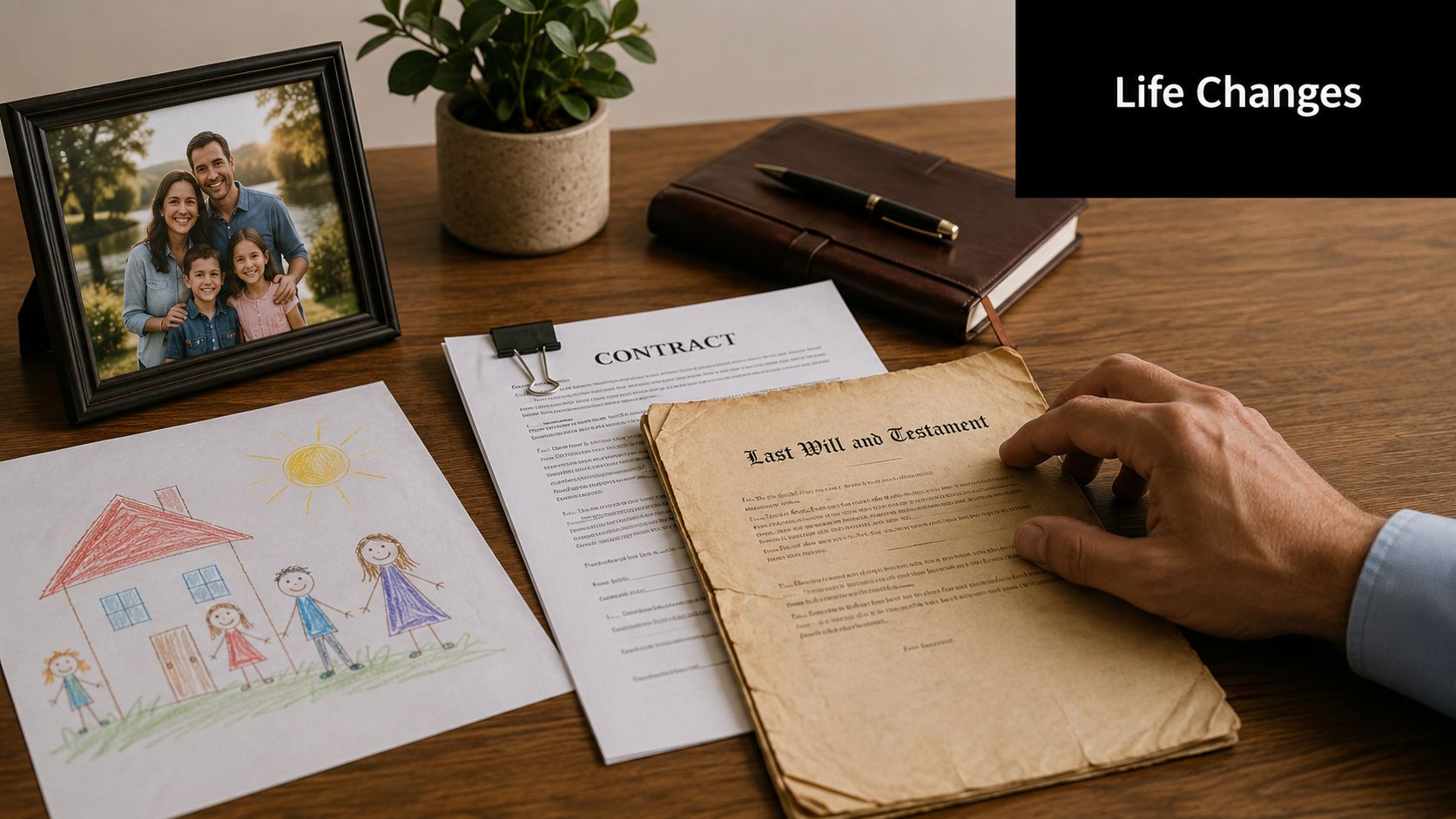
A stale will creates live problems
The risk isn't abstract. An outdated will can:
- Leave out people you now intend to protect if your family changed after signing.
- Appoint the wrong fiduciary if your chosen executor is no longer available, capable, or trustworthy.
- Create friction among survivors because old gift instructions don't match current relationships.
- Fail to reflect your real asset mix if your wealth is now tied to a business, investment accounts, or Florida real estate.
That risk exists in a country where many people haven't done the basics. Only 24% of Americans possess a will in 2025, and even fewer proactively update them. This gap is wider based on wealth. While 90% of those with over $1 million in net worth have an estate plan, only 36% of those with under $1 million do, according to Nationwide's estate planning guidance.
Practical rule: If your life looks different from the day you signed your will, your will probably needs a review.
What falls out of date first
In practice, the first parts to age badly aren't always the dramatic ones. They are often the quiet provisions people don't revisit:
- Executor choices made years ago out of convenience
- Guardianship preferences that no longer fit the people involved
- Specific gifts tied to property you sold, closed, or transferred
- Residuary distributions that no longer reflect your business or family reality
Treat your will like a working legal document, not a one-time event. A stale will doesn't merely fail to help. It can direct money, authority, and responsibility in exactly the wrong direction.
Codicil vs New Will Choosing the Right Update Method
Once you've decided to make a change, there are usually two paths. You can amend the existing will with a codicil, or you can replace it with a new will that revokes the old one. Choosing the wrong path creates confusion later, especially in probate.
When a codicil works
A codicil is best for a narrow fix. Think of it as a surgical amendment, not a rewrite.
Use a codicil when the change is limited and isolated, such as:
- Replacing an executor because the original choice moved away or can no longer serve
- Updating a beneficiary's legal name after marriage or divorce
- Changing one specific bequest without touching the rest of the plan
The catch is that a codicil isn't informal. For minor changes, a codicil must be executed with the exact same legal formalities as the original will. It is not enough to staple a note to the will, write in the margin, or tell family what you meant.
When a new will is the better move
If the changes are broad, use a new will. That's usually the cleaner and safer method.
A new will is the better choice when you're:
- adding a spouse or child
- removing an ex-spouse from meaningful roles
- changing multiple gifts
- restructuring how business interests pass
- revising the overall balance of who gets what
For major revisions, a new will is superior and must include a revocation clause like "I revoke all prior wills and codicils" to prevent conflicts. Handwritten edits on an original will are universally invalid, as explained in this discussion of how Texas lawyers handle will changes. The state in that article is different, but the practical lesson travels well. Writing on a signed will is a bad idea.
A will update should reduce ambiguity, not create a second layer of interpretation.
If you want a plain-language outside perspective on how to change your will, that overview is useful because it frames the same core decision individuals often face. Is this a small amendment, or has your life changed enough that the old document should be replaced?
Codicil vs. New Will Which Is Right for Your Update?
| Factor | Best for Codicil (Amendment) | Best for New Will (Revocation & Replacement) |
|---|---|---|
| Scope of change | One or two limited revisions | Multiple or structural revisions |
| Clarity in probate | Acceptable for simple edits | Stronger for long-term clarity |
| Risk of conflicting terms | Higher if changes stack up | Lower when drafted cleanly |
| Family complexity | Better for straightforward families | Better for blended families or business owners |
| Asset changes | Small corrections | Major redistribution or updated planning |
| Revocation issue | Doesn't replace entire plan | Can expressly revoke all prior wills |
A practical tip. If you need to explain the update at length, you're usually beyond codicil territory.
How to Legally Execute a Will Update in Florida
A good update drafted the wrong way is still a bad update. Florida execution rules matter. If the formalities are missed, the document may fail when your family needs it most.
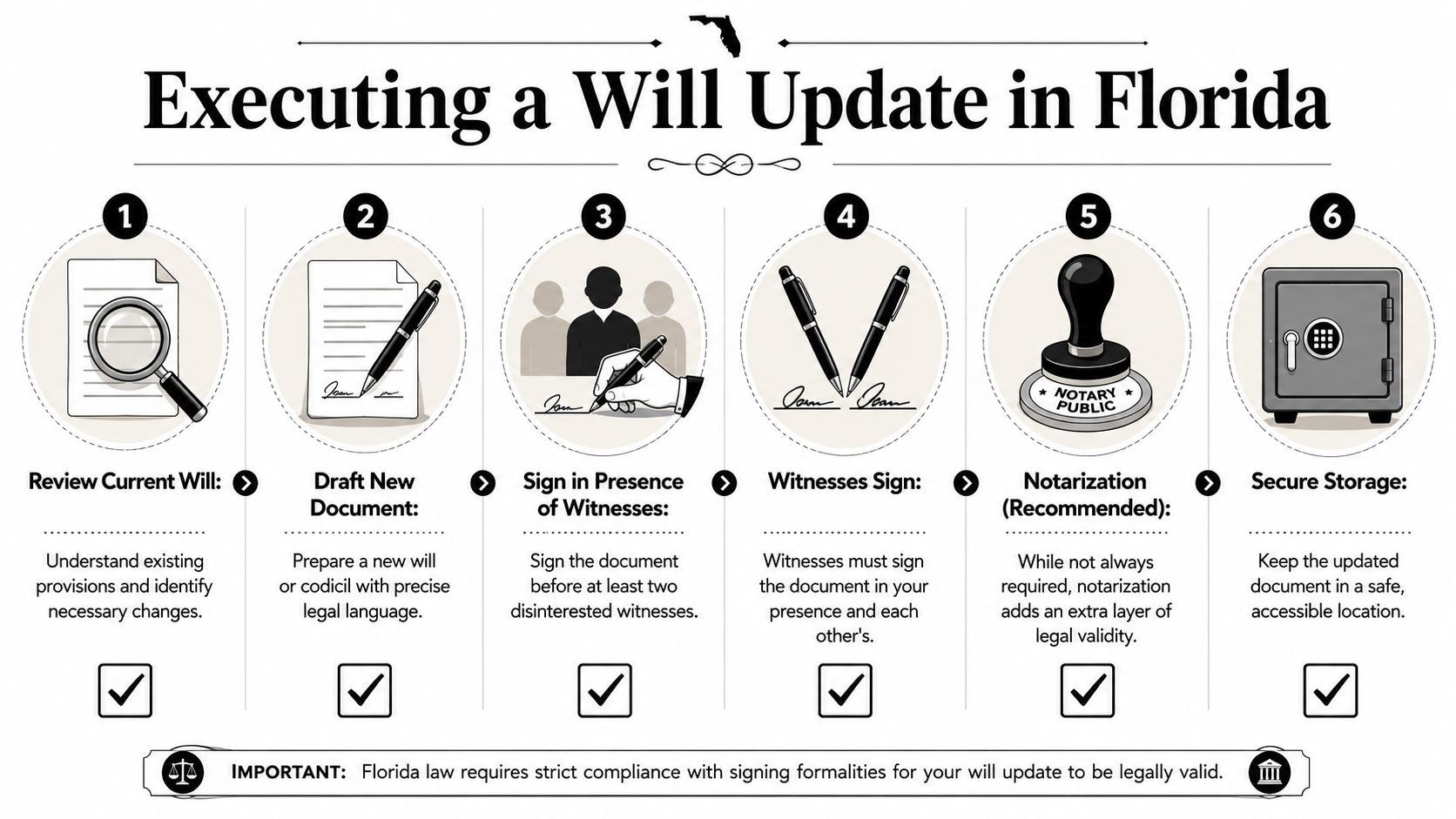
Florida execution checklist
Start with the legal mechanics, not the wording alone. In Florida, revoking an old will must be done explicitly in writing within a new will or by physically destroying the old document with intent. A new will should also include a self-proving affidavit, per Florida Statute 732.503, to speed up probate by avoiding the need for witness testimony in court, as summarized by Florida estate planning guidance on will validity.
Use this checklist when handling an update:
- Review the current document carefully. Don't draft from memory. Confirm what the existing will says.
- Decide whether this is a codicil or a full replacement. If the change touches multiple provisions, replace the will.
- Use clear revocation language in a new will. That reduces the chance of competing documents showing up later.
- Sign with proper witnesses. Florida formalities are not optional.
- Add the self-proving affidavit. It saves your family trouble during probate.
- Store the original where it can be found. A perfect document that nobody can locate creates a different kind of problem.
If you're reviewing basic Florida drafting requirements before updating, these Florida last will and testament forms can help you understand the moving pieces. They are not a substitute for legal advice, but they can help you spot what needs attention.
Why the self-proving affidavit matters
Years after signing, witnesses move, forget details, or become hard to locate. That's where the self-proving affidavit earns its keep.
The self-proving affidavit doesn't change your wishes. It makes those wishes easier to prove when the probate process starts.
For families with business interests, rental property, or multi-account estates, delay is expensive. A technically valid will may still create avoidable friction if the execution package is incomplete.
A few practical tips matter here:
- Don't mark up the old original by hand. Replace or amend properly.
- Don't mix old and new pages. That creates suspicion fast.
- Don't leave prior originals circulating without clarity. If you revoke, revoke cleanly.
- Don't rely on a digital draft alone. Drafting software can help with organization, but legal execution still has to be done correctly.
Beyond the Will Aligning Trusts and Beneficiary Designations
Many estate plans fail because the person updates the will and stops there. But a will does not control every asset you own.
Retirement accounts, life insurance, payable-on-death accounts, and some jointly held property usually pass outside probate. They move by contract or title. If those designations don't match the will, the will loses on those assets.
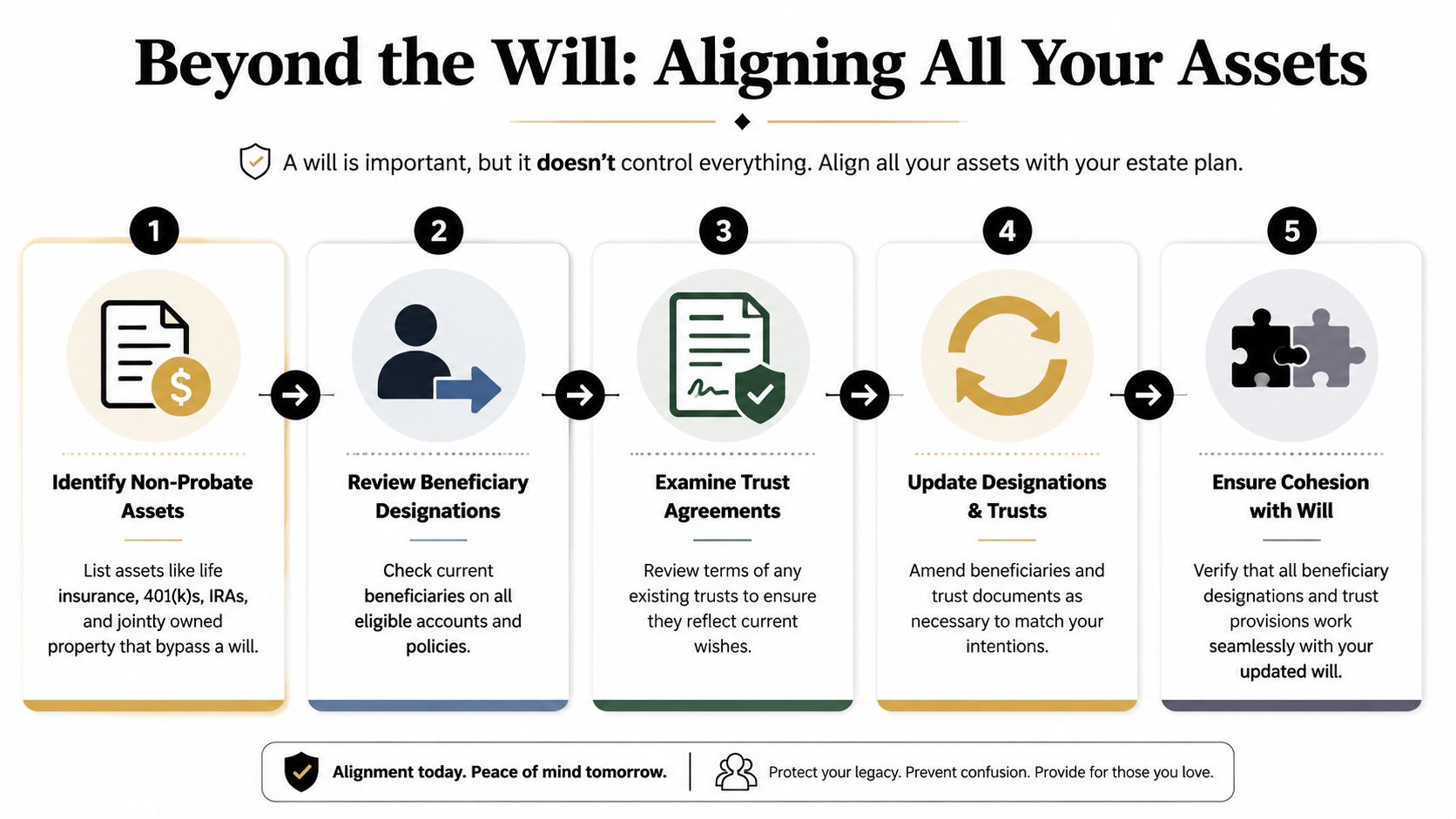
The silent nullification problem
This is the mistake most short guides miss. You sign a new will leaving everything to your current spouse, but your old 401(k) still names your former spouse. The account pays according to the beneficiary form, not the will.
That disconnect isn't rare. An estimated 60% of estate disputes stem from misaligned documents. AARP warns that a will update alone is insufficient, as outdated beneficiary designations on life insurance or retirement accounts can override the will, creating a "silent nullification" of the testator's new wishes, according to AARP's guidance on when to update your will.
Your estate plan is only as consistent as the least-updated document in the file.
If you want another practical overview, this guide to updating your will is helpful because it pushes readers to think beyond the four corners of the will itself.
Assets you must review separately
When people ask me how to update a will, I usually answer with a second question. What else did you update?
Check these categories one by one:
- Retirement accounts such as 401(k)s and IRAs
- Life insurance policies with named beneficiaries
- Payable-on-death and transfer-on-death accounts
- Trust agreements that may no longer match your current wishes
- Joint ownership arrangements that transfer automatically at death
If you already have trust-based planning in place, review how your will and trust interact under Florida trust laws. A pour-over will, revocable trust, and account designations should work together, not compete.
One practical tip stands above the rest. Pull the actual beneficiary forms. Don't assume the bank, brokerage, payroll platform, or insurance carrier updated them because you updated the will.
Key Triggers and the Five Year Review Cadence
People often ask for a fixed rule. There isn't an annual magic date that fits everyone. What works is a two-part discipline. Review after major life changes, and review again on a regular schedule even if nothing dramatic happened.
Events that should trigger an immediate review
Some events should move your estate plan to the top of the list:
- Marriage or remarriage
- Divorce
- Birth or adoption of a child
- Death of a beneficiary, executor, or guardian
- A move to another state
- A major change in wealth or business ownership
These changes affect more than gift language. They affect who should serve, who should inherit, and how your documents work under current law.
Why the five-year cadence works
Even if none of the headline events happened, plans drift out of date. Relationships change. Assets move. Laws shift. Executors age. Businesses expand or shut down.
Experts recommend reviewing your will every 5 years and immediately after major life events. In some jurisdictions, marriage automatically cancels a pre-marital will, making an update not just advisable but legally necessary to avoid dying intestate, as noted in the UK government's guidance on updating a will.
That doesn't mean every review ends with a rewrite. Sometimes the answer is that your plan still works. That's a good outcome too. The point is to confirm it deliberately.
A few useful habits help:
- Calendar the review now. If it isn't scheduled, it usually doesn't happen.
- Review your full plan together. Will, trust, powers of attorney, and beneficiary forms should be checked in one sitting.
- Flag business changes early. A new entity, partner, or operating agreement can affect succession planning fast.
When DIY Will Updates Are Not an Option
Some will updates are simple. Many are not. The line usually appears where family structure, business ownership, or conflict risk enters the picture.
If you own a company, hold property in more than one state, have a blended family, want unequal distributions, or expect someone to challenge the plan, DIY forms become a poor tool for a serious job. They can produce a document. They usually don't produce a coordinated strategy.
Situations where online forms aren't enough
Get legal help if any of these apply:
- You own a business. Succession, control, and valuation issues don't belong in a generic template.
- You have a blended family. Surviving spouse planning and children's inheritance rights need careful drafting.
- You want to disinherit someone likely to object. That raises contest risk and calls for precision.
- You own out-of-state property. Multi-state probate and title issues can complicate administration.
- You have significant non-probate assets. The silent nullification problem becomes more dangerous as account values grow.
What works better than a DIY patch
What works is a coordinated review. Pull the current will, trust documents, account statements, beneficiary designations, business records, and any prior amendments. Then decide what should be replaced, what should be amended, and what should be left alone.
If you need Florida-specific counsel, speak with a Miami estate planning attorney before signing anything. That is especially important if capacity, family conflict, or business succession is in the background.
A few final tips:
- Don't wait for the perfect time. Estate planning usually gets postponed for reasons that never clear up on their own.
- Don't treat a will as the whole plan. It isn't.
- Don't assume old designations are harmless. They can control major assets.
- Do aim for one consistent set of instructions across every document that passes wealth at death.
A well-updated will protects more than paperwork. It protects the people who will have to live with the consequences.
If your will no longer matches your family, your assets, or your business reality, now is the time to fix it. Coto & Waddington, Attorneys at Law helps South Florida families, founders, and business owners update estate documents with practical, modern counsel that keeps wills, trusts, and beneficiary designations aligned. Reach out to schedule a review before an outdated document creates avoidable conflict.