Most advice about how to register a business name starts in the wrong place. It tells you to pick a name, search Sunbiz, file the paperwork, and move on. That approach is incomplete, and in South Florida it can get expensive fast.
A filed name is not the same thing as a protected brand. Florida founders regularly learn that too late, after they've paid for signage, a website, packaging, and social handles. If you remember one rule, remember this: state filing gets you on a registry, but trademark rights are what secure ownership of the brand.
If you're launching in Miami, Fort Lauderdale, or anywhere else in Florida, you need a process that deals with both filing and protection. That means understanding what type of name you're registering, searching properly before you file, handling Florida's DBA rules correctly, and taking the next legal steps after approval.
Table of Contents
- Entity Name vs DBA vs Trademark What to Register
- Your Pre-Filing Name Availability Search
- How to File Your Business Name in Florida
- Common Registration Pitfalls and How to Avoid Them
- After the Name Is Registered Your Next Legal Steps
- Frequently Asked Questions About Business Names
Entity Name vs DBA vs Trademark What to Register
When founders say “business name,” they usually mean three different things. That confusion is where many filing mistakes begin.
Your entity name is the legal name of the company you form, such as “Palm Grove Studio LLC.” Your DBA, also called a fictitious name, is the name the public sees if you operate under something different, such as “Palm Grove Studio.” Your trademark is the brand protection tool that can give you enforceable rights in the name for the goods or services you offer.
A simple way to think about it is this. The entity name is the deed. The DBA is the sign on the front of the building. The trademark is the legal claim that helps you stop others from using the brand in commerce.
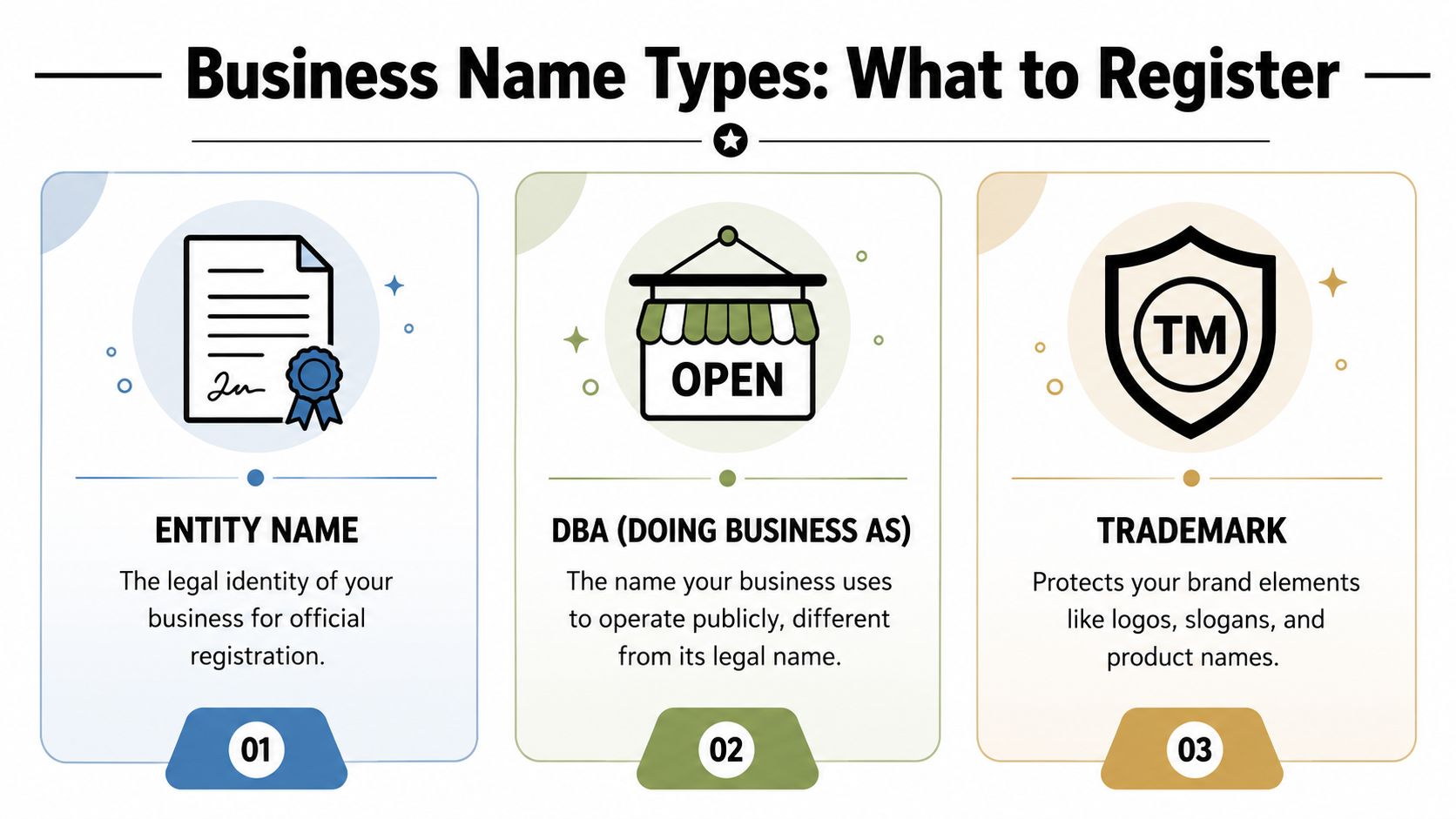
Three different legal tools
A Florida LLC filing does one thing well. It places your company name on the state registry as part of formation. It does not automatically mean you own the brand in the broader marketplace.
A DBA does even less than many founders assume. A fictitious name filing is public notice that your business is operating under a name different from its legal name. It doesn't create a separate legal entity, and it doesn't give liability protection. If you need a fuller explanation of how Florida treats assumed names, this guide on what a fictitious name means in practice is useful.
Practical rule: If you care about the brand itself, don't stop at the LLC or DBA filing. Ask whether the name is trademark-clear and worth protecting.
That distinction matters most for businesses with growth plans. E-commerce brands, agencies, restaurants, product companies, and creative businesses in South Florida often invest in branding before they understand ownership. If the name becomes valuable, trademark analysis becomes central, not optional. For founders building around a name, legal support from professionals who handle filings and brand clearance, including resources like HireParalegals for trademark roles, can help organize the work behind the scenes.
DBA vs LLC Corporate Name At a Glance
| Feature | DBA / Fictitious Name | LLC / Corporate Name |
|---|---|---|
| Main purpose | Public-facing operating name | Legal entity name |
| Creates legal entity | No | Yes |
| Liability protection | No | Tied to the entity structure, not the name alone |
| Used when | You market under a different name | You form the company |
| Ownership effect | Limited public notice function | State registration only, not brand ownership by itself |
A good filing strategy starts with the right question. Are you naming the company, the brand, or both? If you mix those up, you can file the right document for the wrong objective.
Your Pre-Filing Name Availability Search
The most common DIY mistake is filing first and researching later. That reverses the order that protects you.
Before you file anything in Florida, run a layered search. A quick search on Sunbiz is helpful, but it's only one slice of the risk analysis. The key step in major U.S. markets is checking both the state database and federal trademark records before formation documents are filed. For LLCs and corporations, many states reserve the name when formation documents are submitted, while sole proprietors usually need a separate DBA filing, often with DBA costs in the $10 to $100 range and amendment costs in the $20 to $150 range, as explained by the Minnesota Secretary of State business registration guidance.
The search order that reduces risk
Use a disciplined sequence:
- Start with your shortlist. Don't fall in love with one name too early. Build alternatives.
- Check Florida entity records. Search Sunbiz for exact and similar names.
- Search USPTO records. Many founders skip the hard part during this search. Brand conflicts often live here, not in the Florida company database.
- Check domain and handle availability. If the name is legally usable but digitally fragmented, branding gets messy.
- Get legal review before spending on branding. That's the point where a small legal spend can prevent a much larger cleanup.
If your business will depend heavily on the brand, the trademark search should carry more weight than the entity search. The state may accept a filing that still creates a trademark problem later. If you want a deeper look at that process, this article on how to trademark a business name is the right companion.
What works and what fails
What works is a broad search that looks for direct matches, close variations, spacing changes, singular and plural forms, and obvious phonetic equivalents. What fails is the founder's favorite shortcut: “I searched Google and didn't see anything.”
That shortcut misses pending filings, registered marks, similar marks in related services, and names that are available in one place but unusable in commerce. It also misses digital consistency. A name with no usable domain or social presence may still be legally available, but it can become a branding headache from day one.
Check legal availability and practical availability at the same time. A name that clears one but fails the other still costs time and money.
In South Florida, where hospitality, beauty, real estate, logistics, and online businesses all compete hard on branding, I'd rather see a founder reject a name early than defend a weak choice after launch.
How to File Your Business Name in Florida
Once the search is done properly, filing becomes straightforward. The path depends on whether you are forming a legal entity or registering a public-facing name.
Across the United States, registering a business name usually costs less than $300 for most small businesses, although the actual amount changes by state and structure. The SBA notes that a DBA or fictitious name usually costs between $10 and $100, forming an LLC including the name can range from $50 to $500, and incorporating a corporation can range from $100 to $500, according to the U.S. Small Business Administration's business registration guidance.
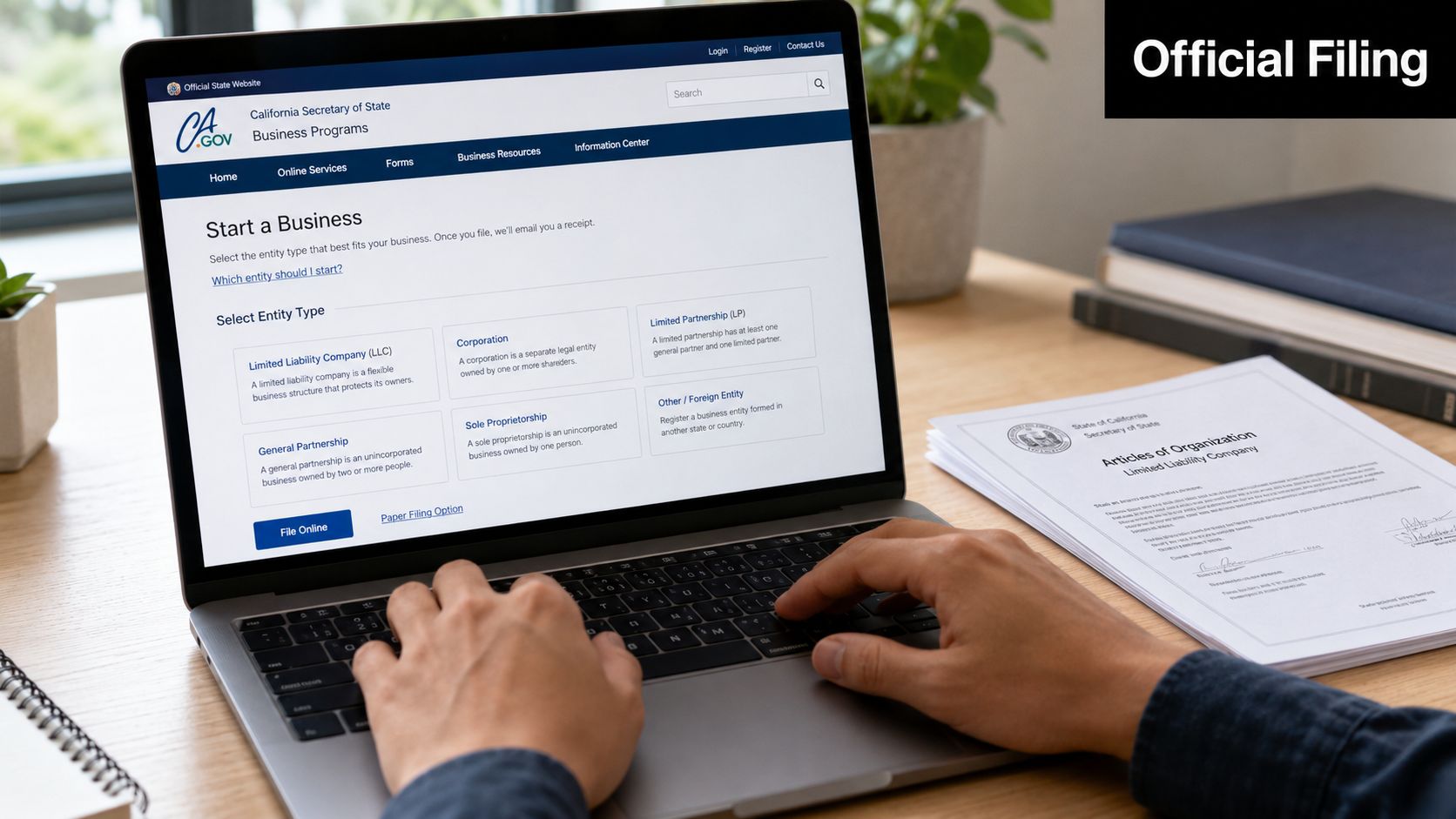
If you are forming an LLC or corporation
For an LLC or corporation in Florida, your business name is generally claimed through the formation filing itself. That means your key tasks are practical:
- Confirm the name first. Run the search before drafting anything.
- Use the correct suffix. If you are forming an LLC or corporation, the legal name needs the appropriate identifier.
- File the formation documents. For Florida entities, that usually means articles submitted through Sunbiz.
- Keep approval records organized. Save the accepted filing, confirmation, and governing documents together.
For founders who need a broader startup checklist, including formation issues beyond the name itself, this resource on setting up a business in Florida is a practical next step.
If you are filing a fictitious name in Florida
If you are a sole proprietor or partnership using a name that doesn't match your legal name, Florida requires a fictitious name registration. Florida Trend explains that sole proprietors and partnerships must register a fictitious name if they operate under any name that does not include the exact wording from their legal name or articles of incorporation, with no exceptions, in this discussion of Florida fictitious name registration rules.
Florida adds a trap that many DIY filers miss. The state requires publication of a notice of intent to use the fictitious name in a newspaper circulating in the county of the principal business address, and the ad must run within 15 days of officially filing the DBA application, as described by this overview of Florida DBA publication requirements.
Miss the newspaper step and your filing can become a problem later. Florida treats fictitious names as a formal compliance task, not casual paperwork.
A few practical tips matter here:
- Match names carefully. Your fictitious name filing should align with how you market the business.
- Keep proof of publication. Don't assume you'll be able to recreate it later.
- Don't treat a DBA like a shield. It's a naming filing, not liability protection.
- Coordinate with tax and banking records. If the public name and legal name don't line up cleanly, onboarding vendors and opening accounts can get slower.
Common Registration Pitfalls and How to Avoid Them
The mistakes around business names are repetitive. Different industries, same errors.
The founder who filed too early
Maria was excited about a beauty brand and filed her LLC as soon as the name looked open in a state search. She ordered packaging, put money into a Shopify build, and locked in social content. Later, she learned someone else was already using a confusingly similar brand in a related space.
That story is common because pre-filing search discipline is uncommon. One source claims that approximately 85% of business name registration failures in major markets stem from name conflicts with existing entities or trademarks, and it also notes that using required suffixes like “LLC” or “Inc.” improves registration success because state rules require those identifiers for clarity, according to this 2024 Reddit guide discussing registration mistakes. Treat that figure cautiously, but the underlying lesson is sound: most avoidable failures begin with poor searching and sloppy naming.
The fix is simple. Search first, file second, spend third.
The owner who thought a DBA created protection
Javier launched a home-services business under a polished trade name and filed a DBA. He assumed that meant he had formed a separate business with legal protection. He had not.
A DBA is a public-facing name filing. It doesn't create a new entity, and it doesn't wall off personal liability. If you need liability protection, form the LLC or corporation and maintain it correctly. If you need the right to stop copycats, assess trademark protection separately.
Tip: If your invoices, trucks, Instagram page, and contracts all use the same brand, make sure the legal structure behind that brand is equally clear.
The business that picked a weak name
A founder chooses a name like “South Florida Plumbing Services.” It may describe the business, but it doesn't do much legal work. Names that are highly descriptive are harder to build into strong brand assets.
A stronger approach is to choose something more distinctive, then confirm it fits your services and market. Distinctive names are easier to clear, easier to market consistently, and often easier to protect.
Three practical habits help:
- Use backup names. Don't operate as if your first choice is guaranteed.
- Add the proper entity suffix. Missing it can trigger rejections or confusion.
- Think past launch day. If the name is too narrow, too descriptive, or too similar to existing brands, growth becomes harder.
After the Name Is Registered Your Next Legal Steps
A registered name is a start. It is not yet a functioning business.
Founders sometimes treat name approval like the finish line, then stall on the documents and systems that support operations. The stronger view is this: the filing gives you a shell, and the next legal steps determine whether that shell can hold up under real customers, real money, and real disputes.
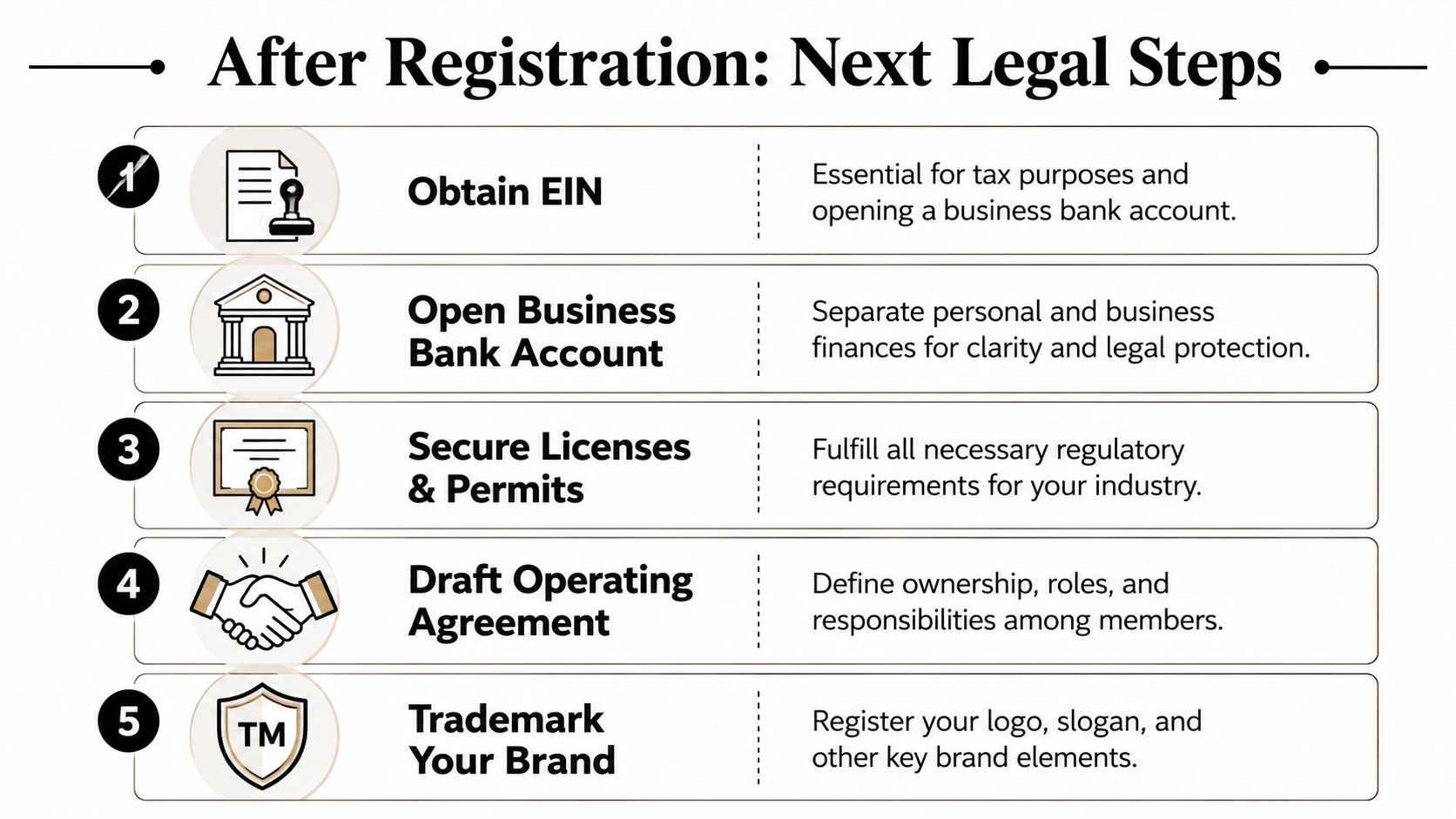
A registered name is not yet a working business
You still need tax setup, internal governance, banking, and licensing. The general registration process often includes obtaining an EIN from the IRS, and practical business operation usually requires more than the state filing alone, as summarized in this overview of business name registration steps.
If there are multiple owners, the operating agreement or bylaws matter as much as the filed name. Those documents address who owns what, how decisions get made, what happens if someone leaves, and how disputes get handled. Without them, founders rely on defaults they often don't understand until there is conflict.
The practical checklist
Use this checklist immediately after filing:
- Get your EIN. You'll need it for taxes and many banking functions.
- Open a true business bank account. Don't mix personal and business funds.
- Prepare internal governing documents. LLCs need an operating agreement. Corporations need bylaws and related setup documents.
- Check local and industry-specific licenses. Florida registration doesn't replace city, county, or regulated-industry requirements.
- Evaluate trademark filing. If the brand matters, move that analysis up your priority list.
There's a point where DIY filing stops saving money and starts creating cleanup work. For founders who want a legal review of formation documents, contracts, and brand protection as one coordinated process, Coto & Waddington, Attorneys at Law offers business formation and startup counsel in South Florida as one available option among the usual filing services and self-filed routes.
The businesses that avoid preventable disputes usually handle structure and branding together, not months apart.
Frequently Asked Questions About Business Names
What if my ideal name is already taken
Don't force it. If the conflict is in state records, trademark records, or both, move to your backup list. Small spelling changes usually don't solve the legal problem if the overall commercial impression is still too close.
A near-match often becomes more expensive than a rename done early. The cheap time to pivot is before launch materials exist.
Can I change my business name later
Yes, but it creates follow-up work. You may need to amend entity records, update contracts, revise banking information, refresh licensing records, and realign marketing assets. If you only want a different public-facing brand, a new fictitious name may solve the problem without changing the entity's legal name.
Change is possible. Clean execution is what matters.
Does a Florida filing protect me outside Florida
No. A Florida entity filing is a state-level filing. It helps with that state registry. It doesn't give you nationwide ownership of the brand.
That's why founders with regional or online growth plans should think beyond state approval and evaluate brand protection early.
Do I own my name once my LLC is approved
Not necessarily. Many guides blur the line between a state filing and actual brand ownership. The better rule is simple: state-level name reservation grants no exclusive rights in the broader trademark sense, while federal trademark registration is what provides enforceable ownership, as discussed by the U.S. Chamber in this article on registering your business name and the limits of state filings.
That distinction matters most when a startup starts selling before fully protecting the name. A founder may believe the LLC approval solved the problem, then face rebranding or litigation after someone with stronger rights objects.
If your name is central to your business, treat the LLC filing as one step in the process, not the final answer.
If you're starting a company in South Florida and want practical guidance on filings, fictitious names, trademarks, contracts, and the legal setup that turns a registered name into a real business, speak with Coto & Waddington, Attorneys at Law. The firm advises founders and small businesses across the Miami and Fort Lauderdale area with business-first counsel in English and Spanish.