Your startup runs on customer trust. You collect emails, payment details, employee records, vendor logins, and maybe health or financial information. Then one morning, your team realizes someone accessed a company inbox, sent fake wire instructions, and downloaded customer data before anyone noticed.
At that point, the problem isn't only technical. It becomes legal, financial, and reputational all at once. You may need forensic help, lawyers, customer notices, PR support, and a plan for regulators and contract partners. Many founders start searching for what is cyber liability insurance only after that moment.
If you're trying to get ahead of that risk, it helps to start with understanding cyber insurance requirements, especially if you're comparing what insurers expect before they'll even quote a policy. The key lesson is simple. Cyber insurance can be valuable, but only if you know what it covers, what it excludes, and what security controls you must already have in place.
Table of Contents
- Introduction to Cyber Liability Insurance
- Understanding Key Concepts of Cyber Liability Insurance
- Main Coverage Areas and Common Exclusions
- Comparing Cyber Liability to Other Business Policies
- Startup Breach Scenarios and Key Lessons
- Cost Factors Limits and Florida Regulations
- How to Secure a Policy and Work with Counsel
- Conclusion and Call to Action
Introduction to Cyber Liability Insurance
A South Florida founder launches a fast-growing e-commerce brand. Orders come in through Shopify, the team collaborates in Microsoft 365, and contractors use shared cloud folders. Everything feels normal until a customer reports a password reset email she never requested. Then another customer says her card was used elsewhere.
By the end of the day, the founder isn't just dealing with an IT issue. She's dealing with breach response, vendor obligations, customer communications, and the fear that online reviews will frame the company as careless. Even if the company survives the immediate incident, trust may not come back quickly.
That's the business problem cyber liability insurance is built to address. It fills a gap that ordinary business policies often leave open when losses come from a data breach, network damage, or business interruption caused by a cyberattack or malfunction, as explained in this overview of cyber liability insurance coverage and claim drivers.
Cyber insurance isn't a substitute for cybersecurity. It's a financial and legal backstop for the day your preventive measures fail.
A good policy can help fund the response. A bad fit can leave a founder learning, too late, that the most painful losses weren't covered.
Understanding Key Concepts of Cyber Liability Insurance
Cyber liability insurance works best when you treat it like a contract for a specific category of digital harm, not as a generic safety net. The phrase sounds broad, but the actual policy is usually structured around distinct types of expenses and distinct conditions for coverage.
Why ordinary business insurance often falls short
Traditional business insurance often focuses on physical property damage, bodily injury, or familiar liability claims. A server outage caused by malware, a stolen customer database, or a fraudulent transfer initiated through a compromised email account doesn't fit neatly into those older categories.
That's why standalone cyber coverage developed into its own market. The global cyber liability insurance market reached about $15.6 billion in premiums in 2024 and is projected to reach between $29 billion and $54.83 billion by 2030, according to cyber insurance market statistics compiled by Security.org. Even with that growth, the same source notes that cyber insurance still represents less than 1% of global property and casualty premium volume, and only 47% of eligible organizations worldwide have a standalone policy.
First party and third party in plain English
The easiest analogy is home insurance plus personal liability.
If a pipe bursts in your house and damages your floors, that resembles first-party coverage. It responds to your own direct loss. In cyber insurance, first-party coverage can reimburse breach response costs, forensic investigation, system restoration, business interruption losses, and legally permissible ransomware payments, based on NASPO's Cyber Liability Insurance 101 guide.
If a visitor slips on your property and sues you, that resembles third-party coverage. In cyber insurance, third-party coverage addresses claims brought by customers, partners, or regulators after a data disclosure or network security failure.
A founder should ask two separate questions:
- What will this policy pay for inside my company? Think forensic firms, data restoration, and crisis response.
- What will this policy pay for when someone else claims I harmed them? Think lawsuits, regulatory matters, and contractual liability.
For a practical companion to that review, many startups also benefit from stronger data security best practices, because the legal answer and the technical answer are closely connected.
The new reality of underwriting
Insurers no longer behave like passive observers. They often want evidence that you take basic cybersecurity seriously before they issue a quote.
The clearest summary comes from NASPO: cyber liability insurance is architecturally bifurcated into first-party and third-party coverage modules, with modern underwriting requiring documented MFA, EDR tooling, and employee security training before issuing quotes in its underwriting overview.
Practical rule: If your company can't prove baseline controls, don't assume the insurer will overlook the gap. The underwriting process may flag it before binding, or the policy language may surface it during a claim.
That point confuses founders all the time. They think buying the policy comes first and security hardening comes later. In practice, insurers often want the opposite.
Main Coverage Areas and Common Exclusions
Founders usually ask, “What does cyber insurance cover?” The better question is, “Which losses are covered, which costs are only partly covered, and which harms sit outside the policy entirely?”
What policies usually try to pay for
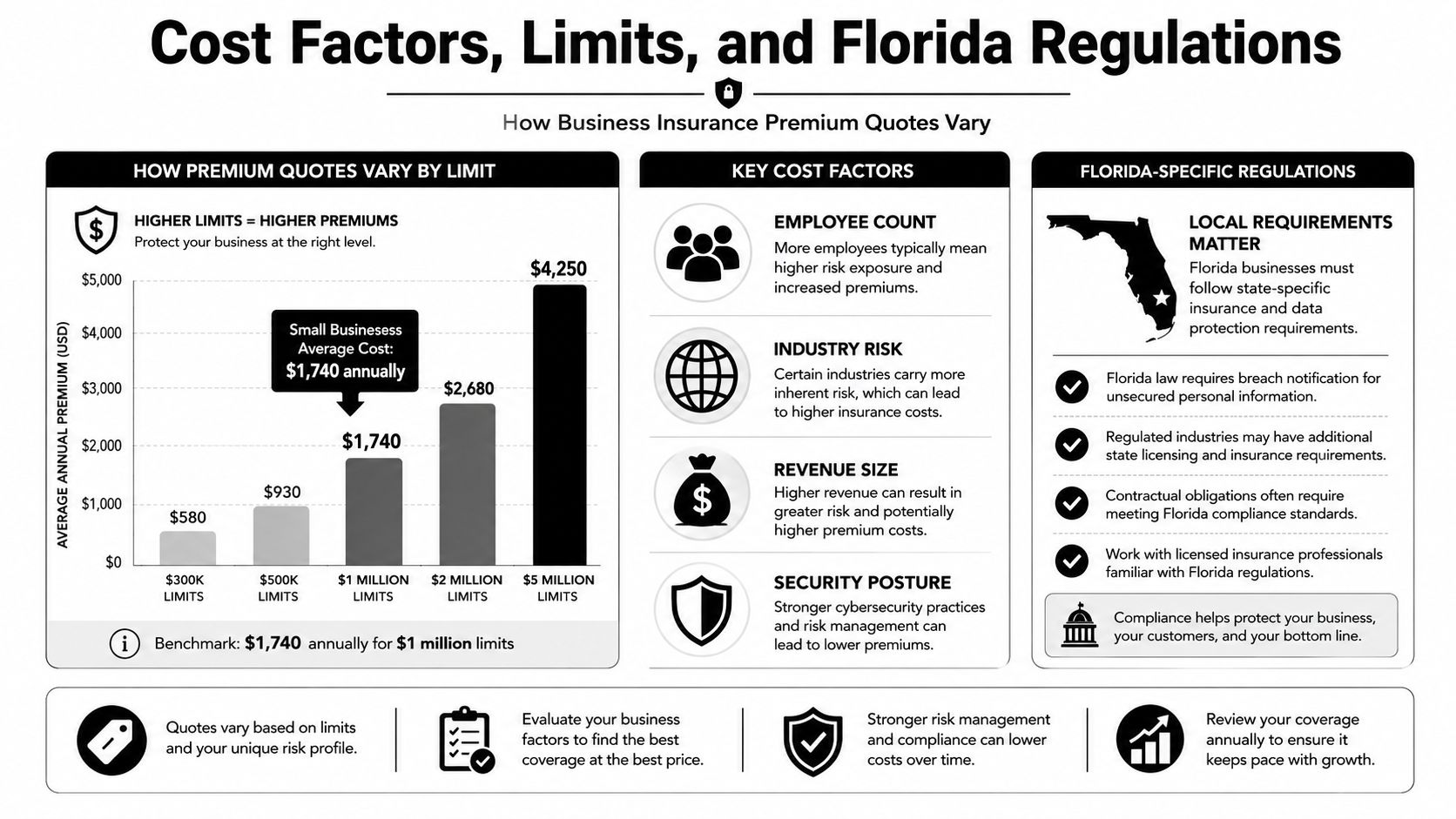
Most cyber policies are designed to address direct breach-related expenses that can be documented and tied to an event. Common examples include:
- Breach response services: Incident handling, legal coordination, customer notification, and related crisis-management expenses.
- Forensic investigation: Outside specialists determine what happened, how the attacker entered, and whether systems are still compromised.
- System recovery and interruption losses: If the attack shuts down operations, a policy may address restoration costs and some lost business income, depending on the wording.
- Ransomware-related expenses: Some policies address legally permissible payments and the cost of responding to extortion events.
Claims data explains why these categories matter. Ransomware accounts for 60% of the total value of large cyber insurance claims globally, while Business Email Compromise and Funds Transfer Fraud make up 58% to 60% of all claims by volume, according to Cynet's summary of cyber claim patterns.
The exclusions founders miss
The first hidden gap is the security baseline exclusion. If the application says you use MFA, endpoint protection, or employee training, but the controls were not maintained as stated, the insurer may argue that the company failed to meet a condition of coverage.
The second hidden gap is reputational harm. Many policies may cover the cost of hiring a PR firm after a breach. That doesn't mean the policy covers the long-term business loss from customers deciding they no longer trust you.
A useful source puts the distinction plainly: policies often exclude actual reputational damage, covering only the cost of PR interventions. This ambiguity leaves startups unaware that brand erosion losses may not be reimbursed, as discussed in these questions to ask before buying cyber insurance.
| Issue | Often Covered | Often Not Covered or Unclear |
|---|---|---|
| Forensic response | Yes, if tied to a covered event | Less likely if exclusions are triggered |
| PR firm costs | Sometimes | Long-term lost revenue from brand erosion |
| Regulatory response | Sometimes | Penalties outside policy language |
| Business interruption | Sometimes | Losses that don't satisfy waiting periods or definitions |
Ask the broker to show you where the policy addresses PR expenses, and where it says nothing about future lost revenue from reputational damage. Silence there matters.
Tip: Read exclusions with the same attention you give the declarations page. Coverage summaries sell the policy. Exclusions define the fight.
Comparing Cyber Liability to Other Business Policies
Founders often stack policies without understanding the borders between them. That creates false confidence. A company may carry general liability, professional liability, and D&O coverage and still be exposed after a cyber event.
How the policies differ in real life
General liability usually addresses bodily injury, property damage, and advertising-related claims. It's the policy you think about when a visitor is hurt on your premises or tangible property is damaged.
Professional liability usually focuses on service errors, omissions, or failures in professional work. A software consultant who delivers flawed work product may look here first, but a network intrusion or data theft claim often requires separate cyber analysis.
Directors and officers insurance protects leadership against claims tied to management decisions and governance issues. It isn't built to function as your breach response fund.
Cyber liability insurance is different because the event itself is digital. The costs arise from stolen data, compromised systems, fraudulent electronic communications, and the legal fallout tied to those events.
A simple way to think about policy layering
Use this mental shortcut:
- General liability for classic business accidents.
- Professional liability for mistakes in services.
- D&O for claims against leadership decisions.
- Cyber liability for digital incidents and their aftermath.
A founder shouldn't assume one endorsement solves every overlap. Some businesses can use bundled options or endorsements for narrow exposures. Others need a standalone cyber policy because the company stores customer data, relies on cloud systems, or processes online payments every day.
Tip: Ask your broker and counsel the same hypothetical incident under every policy you carry. If the answers sound hesitant or inconsistent, you likely need clearer wording or a separate cyber form.
Startup Breach Scenarios and Key Lessons
Real understanding usually comes from scenarios. Here are three founder-level examples based on the kinds of incidents startups commonly face in South Florida.
Scenario one ransomware freezes operations
A healthcare-adjacent startup loses access to scheduling data and internal documents after an attacker encrypts its systems. Operations slow immediately. Staff can't access normal records, customers get nervous, and leadership is pushed to make decisions under pressure.
For this type of event, first-party cyber coverage is often the critical piece because it may address forensic work, restoration, and business interruption components if the policy language supports them. This category matters because ransomware accounts for 60% of the total value of large cyber insurance claims, according to the same Cynet claim analysis discussed earlier.
The lesson is practical. If backups are weak, systems are poorly segmented, or privileged access lacks safeguards, the policy may help with money but not with downtime discipline.
Scenario two a fake payment request gets approved
A Miami startup receives what looks like an authentic email from a founder asking accounting to send funds to a new vendor account. The message is fake. The money leaves before anyone verifies the change by phone.
Business Email Compromise claims are common by volume, which is why founders need to ask whether the policy addresses social engineering, funds transfer fraud, or only narrower categories of cyber events. A team that wants a plain-language operational checklist after an incident can review this guide to post-breach actions to understand how immediate response steps affect legal and insurance outcomes.
Scenario three data exposure creates legal fallout
A software startup accidentally exposes a cloud storage folder containing customer files. The company fixes the configuration quickly, but customers still ask what happened, whether their data was copied, and whether the startup will pay for resulting harm.
Third-party coverage plays a central role. The startup may face customer claims, contract claims from business partners, or regulatory attention. Yet, hidden gaps also emerge. If the company represented strong security controls in the application but didn't maintain them, that mismatch can become a coverage fight.
A breach doesn't have to involve sophisticated malware to create expensive legal problems. A simple misconfiguration can be enough.
Tip: Run tabletop exercises for ransomware, BEC, and accidental exposure separately. Each one triggers different people, different vendors, and different insurance questions.
Cost Factors Limits and Florida Regulations
The premium for cyber insurance isn't random. Insurers price the policy by looking at your size, your risk profile, your controls, and the kind of data your company handles.
What affects the quote
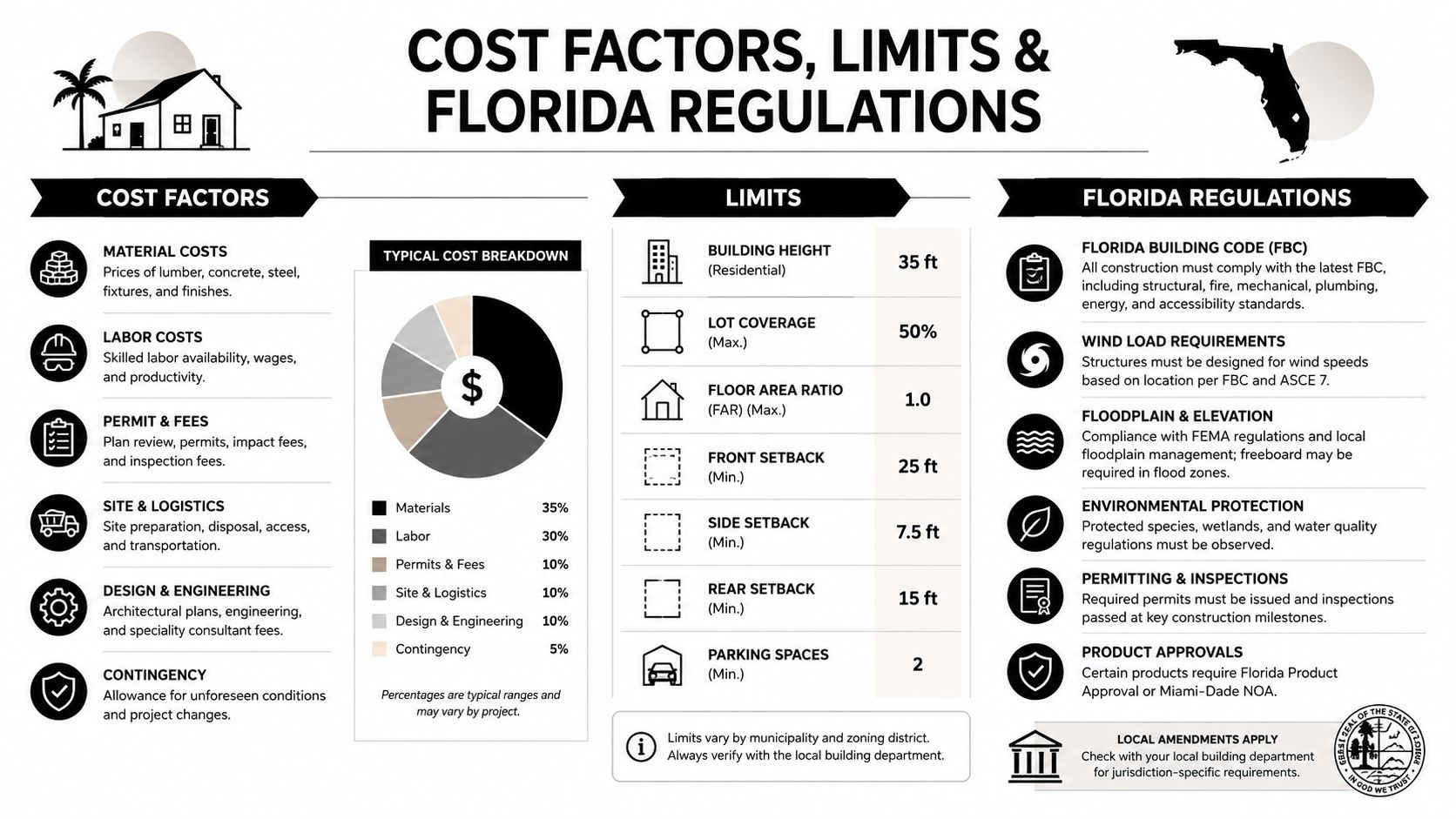
For startups and smaller businesses, cost often starts with employee count, industry exposure, revenue, and security posture. Windes reports on cyber liability benchmarks that small businesses under 50 employees average $1,740 annually for a standard $1 million coverage limit with a $2,500 deductible, while mid-market entities pay $2,500 to $5,000 for $2 million limits.
That same discussion emphasizes that stronger backup protocols and patch management help stabilize premiums, while weaker controls can produce higher pricing or a declined application.
A useful way to organize the variables is this:
- Employee count: More users often means more endpoints, more credentials, and more opportunities for phishing or access misuse.
- Industry risk: A company handling health, financial, or payment-related information may draw more scrutiny than a lower-risk operation.
- Revenue size: Larger operations may create larger interruption and liability exposures.
- Security posture: MFA, EDR, backups, patching, and training all influence how an underwriter sees your account.
For founders reviewing broader compliance obligations, website practices matter too. A weak public-facing privacy posture can signal deeper issues, so it's worth reviewing privacy policy requirements for websites as part of the same risk audit.
How to think about limits
Choosing a limit is a legal and business judgment, not just a budget choice. Windes notes that coverage limits are often calibrated to 1 to 3 times annual revenue in light of potential liability exposure in its explanation of cyber limits and deductibles.
Security.org also notes that many small businesses choose $1 million in coverage, and that this often appears as $1 million per occurrence and $1 million aggregate in its market statistics guide. That may be enough for some companies, but not for every startup with concentrated customer data or heavy regulatory exposure.
Florida compliance issues founders shouldn't ignore
Florida businesses also need to think beyond the policy itself. A breach can trigger notification obligations, contract notice duties, and sector-specific rules depending on what data the company stores and who it serves.
The insurance policy doesn't replace those duties. It may help fund the response, but it won't rewrite state law, erase vendor promises, or cure internal compliance gaps.
Key takeaway: Buy limits based on exposure, not comfort. The premium is one number. The uninsured portion of a claim is another.
Tip: Before requesting quotes, prepare a short internal memo listing your data types, top vendors, critical systems, and legal obligations. That document sharpens both underwriting and legal review.
How to Secure a Policy and Work with Counsel
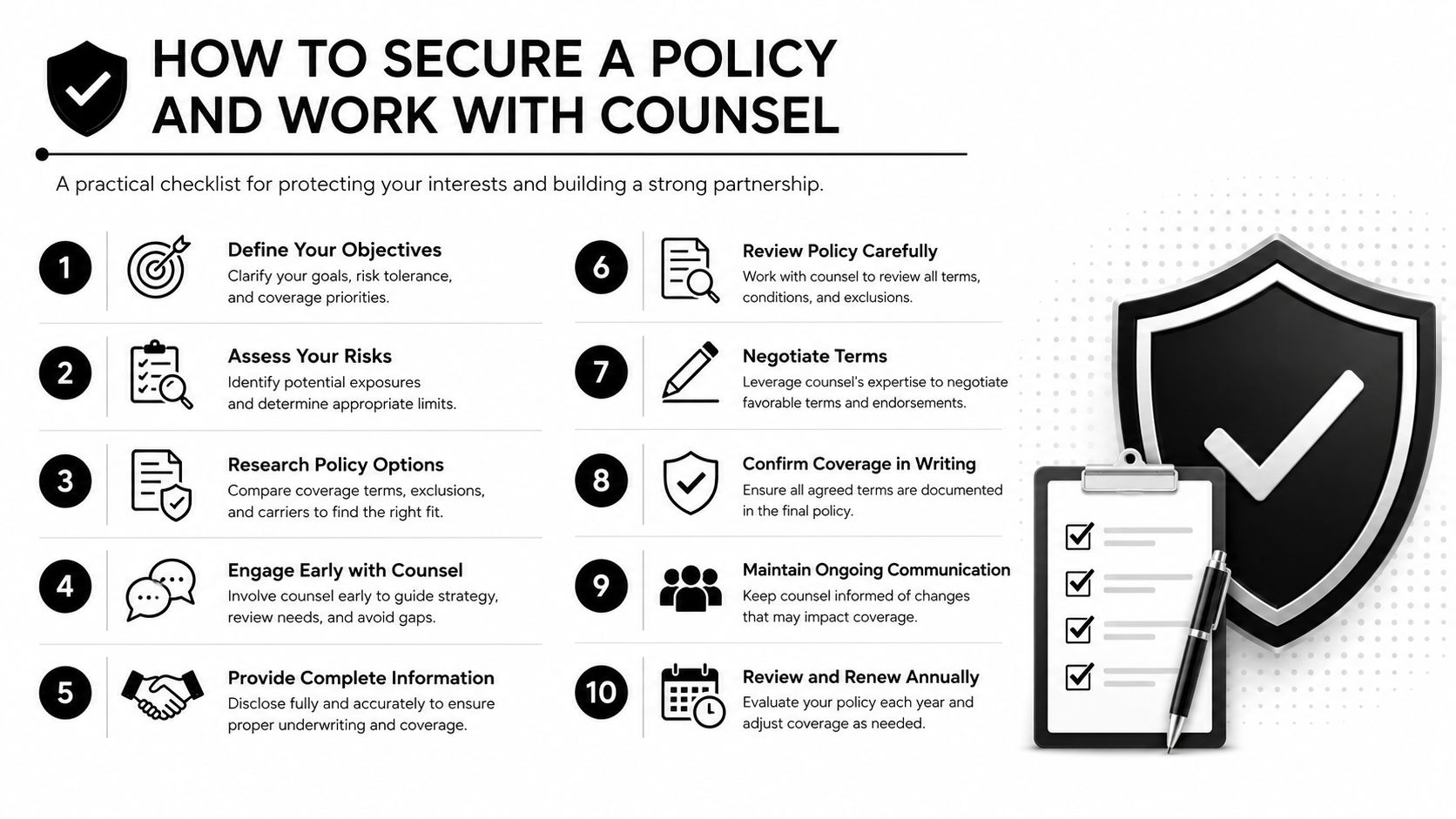
Getting cyber insurance is part application process, part security review, and part contract negotiation. The strongest buyers prepare before they ask for a quote.
Prepare before you apply
Start with a baseline audit. Confirm whether privileged accounts use MFA, endpoints have EDR, backups are tested, and employee training is current. If those controls sound familiar, that's because they often determine whether you're even quote-ready.
This matters more than many founders realize. Surveys show 17 critical application questions now demand proof of specific security controls, yet few guides explain how failures trigger exclusions until baselines are implemented, according to CSO Online's review of cyber insurance application requirements.
Build a simple application file with:
- A control inventory: MFA, EDR, backup processes, patching cadence, and awareness training.
- An incident response plan: Even a lean version helps show operational maturity.
- Vendor and cloud map: Identify critical systems and outside providers.
- Loss history summary: If you've had prior incidents, describe them accurately and carefully.
Questions to ask before you bind coverage
Policy shopping isn't only about price. It's about wording.
Ask questions like these:
- How does the policy define a covered cyber event?
- Does the policy address social engineering losses or only narrower fraud categories?
- What exclusions apply if a control listed in the application wasn't fully maintained?
- Does the policy cover PR expenses only, or anything beyond that?
- Which panel vendors must the company use after a breach?
A founder should also compare multiple carriers. One insurer may be flexible on a technical issue another carrier holds firm on.
Where legal review matters most
Counsel helps where founders and brokers often move too fast. The issue isn't only whether a policy exists. The issue is whether the wording matches the company's actual risk.
A business attorney can review representations in the application, compare policy forms, and flag mismatches between your contracts and your insurance program. If you want a practical overview of that role, this explanation of what a business attorney does gives the right frame.
Look closely at these pressure points:
| Review Area | Why It Matters |
|---|---|
| Application answers | Inaccurate answers can create claim disputes |
| Exclusions | This is where hidden gaps usually live |
| Vendor requirements | Post-breach response may be limited to approved firms |
| Notice obligations | Late notice can complicate recovery |
Tip: Have your security lead, broker, and lawyer review the same application before submission. Each person sees a different risk.
Conclusion and Call to Action
Cyber liability insurance helps startups survive the legal and financial aftermath of a breach, but only when the policy matches the company's real operations. Founders get into trouble when they assume standard business coverage is enough, overlook security baseline requirements, or confuse PR expense coverage with actual protection against reputational loss.
Take action this week. Schedule a cybersecurity audit, document your controls, compare quotes from at least three insurers, and get legal review before you bind coverage. If your company operates in South Florida, bilingual counsel with startup and compliance experience can help you spot the gaps before a claim exposes them.
If you want a startup-focused review of cyber insurance terms, application risks, privacy obligations, and Florida business exposure, contact Coto & Waddington, Attorneys at Law. The firm advises founders and small businesses across South Florida with practical, bilingual counsel that helps align contracts, compliance, and risk management before problems become claims.