Starting a business in Miami’s electrifying market is a thrill, but a lot of founders quickly learn that the legal hurdles can be just as tough as the competition. A small business attorney in Miami isn't just someone you call when you’re in trouble; they are a strategic partner who helps you build a solid foundation for long-term success.
Think of them as your co-pilot, helping you navigate the maze of local and state law from the very beginning.
Why Your Miami Business Needs a Strategic Legal Partner
Launching a new venture—whether it's a tech startup in Brickell or an e-commerce brand based out of Doral—takes more than a great idea and a ton of hard work. It demands a legal framework that shields you, your assets, and your future growth. Many founders treat legal services as an expense to put off, but honestly, that’s a critical mistake.
It’s like a pilot running through a pre-flight checklist. An attorney helps you complete your business's legal checklist before takeoff, making sure everything from your company structure to your first contracts is sound. This proactive approach prevents costly turbulence down the road, like partnership disputes, city fines, or even lawsuits that could ground your business for good.
When Should You Hire a Business Attorney?
The right time to get legal advice is almost always sooner than you think. Waiting until a problem erupts means you’re already playing defense. Instead, bringing in an attorney at key moments can turn what feels like a legal chore into a real competitive advantage.
You should be seriously thinking about hiring a lawyer when you are:
- Choosing Your Business Structure: Deciding between an LLC, S-Corp, or C-Corp has massive long-term effects on your liability and taxes.
- Hiring Your First Employee: Employment laws are a minefield, and one wrong step can lead to serious compliance headaches.
- Signing a Major Lease or Contract: A lawyer ensures the terms are fair and actually protect your interests before you’re locked in.
- Raising Capital or Taking on Investors: Proper legal documents are non-negotiable for securing funding and defining who owns what.
The good news for Miami entrepreneurs is that finding specialized counsel has gotten easier. In fact, Florida now has the fastest-growing lawyer population in the United States, with the number of active resident attorneys surging by 17% over the last decade. This boom, driven by corporate relocations and our city’s strong business ties, means you have greater access to expert advice right in your backyard. You can read the full report on Florida's lawyer population growth to understand the trend.
Expert Tip: Don't wait for a legal "emergency." The best time to schedule a consultation is before you sign your first big contract or hire your first employee. An initial review can save you thousands by spotting risks before they turn into expensive problems.
Here’s a quick reference guide to help you identify those make-or-break moments when a lawyer isn't just helpful—they're essential.
Key Milestones When You Need a Miami Business Attorney
| Business Milestone | Why You Need an Attorney | Potential Risk of Skipping Legal Advice |
|---|---|---|
| Forming Your Business | To choose the right entity (LLC, Corp) and draft a solid operating agreement or bylaws. | Personal liability for business debts; disputes between founders over ownership and roles. |
| Hiring Employees or Contractors | To create compliant employment/contractor agreements and avoid worker misclassification. | Fines from the Department of Labor; lawsuits over unpaid overtime or wrongful termination. |
| Signing a Commercial Lease | To review and negotiate terms that don't put your business at a long-term disadvantage. | Getting stuck in an unfavorable lease with hidden costs and no exit options. |
| Taking on Investors | To structure the deal correctly (SAFE, convertible note, equity) and comply with securities laws. | Losing too much company control; investor lawsuits and regulatory penalties. |
| Creating Client/Customer Contracts | To ensure your contracts are enforceable in Florida and protect your revenue and liability. | Unpaid invoices; inability to enforce your terms if a client disputes the work. |
| Protecting Your Brand & IP | To file for trademark protection and create agreements that assign IP ownership to the company. | Another business taking your name; co-founders or contractors claiming ownership of your IP. |
These milestones are forks in the road. The path you choose determines how protected your business will be as it grows.
Ultimately, partnering with a knowledgeable small business attorney in Miami is an investment in your company’s stability and future. It buys you the peace of mind to focus on what you do best—growing your business.
Ready to build your business on a solid legal foundation? Contact Coto & Waddington today for a consultation and learn how we can become your strategic legal partner.
Choosing the Right Business Structure in Florida
One of the very first, and most foundational, decisions you’ll make as a business owner is choosing the right legal structure. Think of it like pouring the foundation for a new house in Miami; it has to be strong enough to support your current plans and anything you decide to build on top of it down the road. This choice directly impacts your personal liability, how you’re taxed, and your ability to raise money.
For most Miami businesses, the decision comes down to three main options: the Limited Liability Company (LLC), the S Corporation (S-Corp), and the C Corporation (C-Corp). Each serves a distinct purpose and is built for different business goals. Getting this right from the start is one of the most critical jobs for a small business attorney in Miami.
An LLC is often the go-to for new entrepreneurs, and for good reason. It acts as a protective shield for your personal assets—like your home and savings—by separating them from business debts and lawsuits. This separation is known as the "corporate veil," and keeping it intact is absolutely crucial for your personal financial security.
LLCs and Corporations: A Quick Comparison
When you’re just starting, the differences between these structures can feel a bit fuzzy. The key is to understand how each one handles liability, taxation, and ownership. A quick conversation with an attorney can immediately clarify which path lines up with your specific vision.
- Limited Liability Company (LLC): This is all about flexibility. It gives you personal liability protection, but profits and losses can be passed directly to the owners' personal tax returns. This avoids the "double taxation" that can hit C-Corps.
- S Corporation (S-Corp): This isn't a business structure itself, but a tax election. You can form an LLC or a corporation and then elect to be taxed as an S-Corp. It also lets profits pass through to owners' taxes but comes with stricter rules, like being limited to 100 shareholders who must be U.S. citizens or residents.
- C Corporation (C-Corp): This is the classic corporate structure, perfect for businesses that plan to seek venture capital and eventually go public. It exists as a completely separate legal and tax entity from its owners. The trade-off? Its profits are taxed at the corporate level and then taxed again when distributed to shareholders as dividends.
This decision guide can help you see when it's time to bring in an attorney for major milestones like this one.
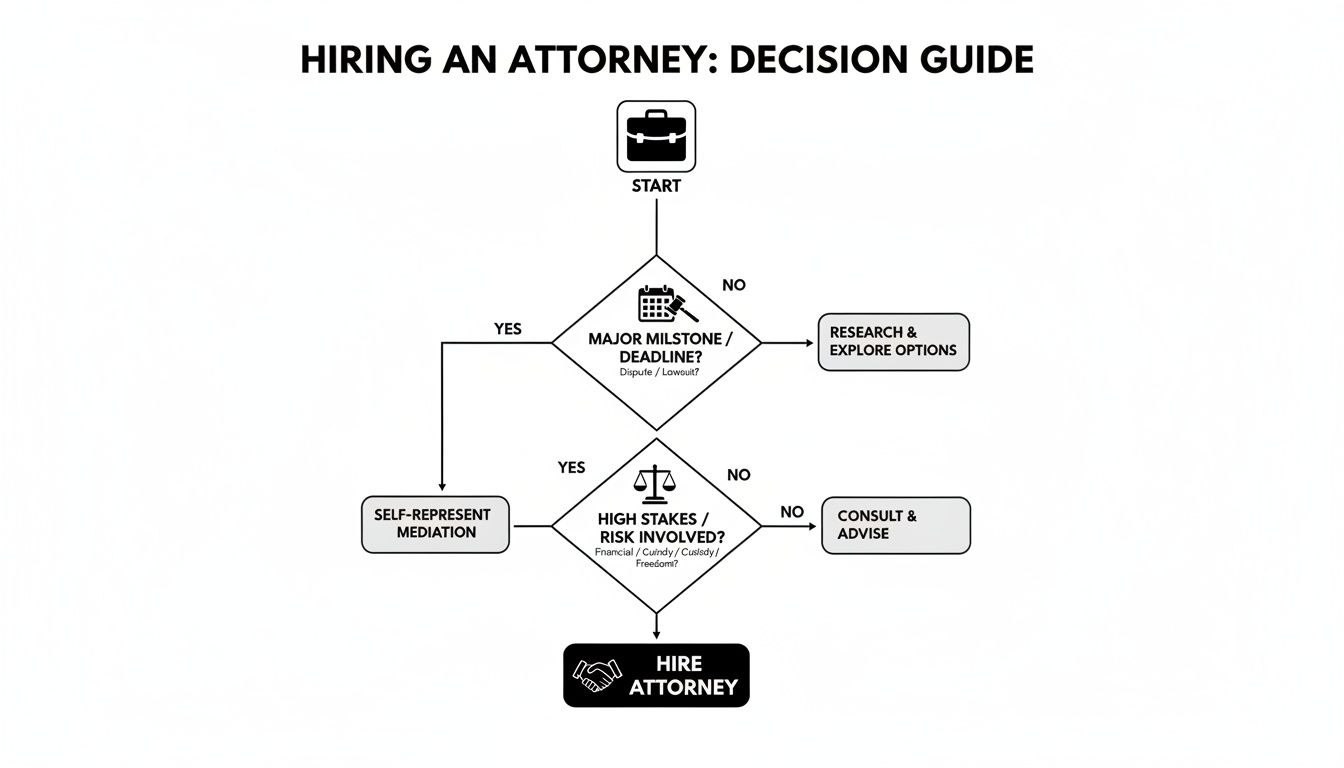
As the flowchart shows, hitting key business milestones is a clear signal that it's time to get professional legal guidance to lock in your next steps.
The Florida LLC vs. Delaware LLC Debate
A common question we get from Miami startups, especially those with big growth ambitions, is whether to form their company in Florida or Delaware. For most local businesses serving a local market, a Florida LLC is simpler and more cost-effective. End of story.
But for companies planning to raise money from venture capitalists, Delaware is the gold standard. Why? Investors love the predictability of Delaware's deep, well-developed body of corporate law and its business-focused court system.
Key Takeaway: If your goal is to attract national investors, forming a Delaware C-Corp from day one can make you a much more attractive candidate. It signals that you’ve structured your company for serious growth and a potential future sale or IPO. Your attorney can help you weigh the real-world costs and benefits.
Deciding between these entities is complex. To dig deeper, you can check out our guide on how to choose between an LLC, S-Corp, and C-Corp in Florida.
Tips for Making the Right Choice
Picking your business structure isn't a decision you should make on a whim. Here are a few tips to guide your thinking:
- Consider Your Long-Term Goals: Are you planning to stay small and local, or are you shooting for national expansion and outside investment? Your five-year plan should be the biggest factor in your choice.
- Think About Liability: If your business has even a small risk of lawsuits or debt, a structure that separates your personal and business assets (like an LLC or corporation) is a must-have.
- Talk to Your Accountant and Attorney: This is a decision with both legal and financial consequences. Getting advice from both your legal and tax professionals is the only way to make sure you're covered from all angles.
Making the right choice sets the stage for your company's future success. Don't make this foundational decision alone. Schedule your consultation today to get expert guidance on the right business structure for your Miami venture.
Core Legal Services That Fuel Your Business Growth
So, beyond filing some paperwork, what does a small business attorney in Miami actually do day-to-day? It’s a great question. The answer is that a good business lawyer is far more than a one-time service provider. Think of them as a long-term partner who provides the legal armor to protect your business and clear the path for growth. Their real work begins after the initial setup—it’s about actively shielding your venture from risk.

From hammering out airtight contracts to locking down your brand identity, these core services form the bedrock of your company. Once you understand them, you’ll see how an attorney transitions from a setup specialist to an ongoing strategic advisor.
Drafting Airtight Contracts and Agreements
Contracts are the lifeblood of your business. They’re the documents that define your relationships with clients, vendors, partners, and employees. Relying on a generic template you downloaded online is like building a hurricane shutter out of cardboard. It might look the part, but it will absolutely fail when you need it most.
A seasoned Miami business lawyer drafts documents specifically designed for your operations and, just as importantly, enforceable under Florida law. They anticipate where things could go wrong and build in clauses that protect you from those exact scenarios.
Key Insight: A custom-drafted contract isn’t an expense; it’s insurance. It ensures you get paid, limits your liability, and provides a clear roadmap for resolving disagreements before they explode into costly litigation.
A well-written agreement is your first line of defense. It prevents the kind of misunderstandings that can sour business relationships and drain your bank account.
Three Clauses Every Miami Service Agreement Needs
When you're working with clients, especially in a dynamic market like South Florida, certain protections are non-negotiable. Your attorney will almost certainly insist on these three clauses:
- Clear Scope of Work: This section precisely defines the services you'll provide, including deliverables, milestones, and timelines. It's your primary defense against "scope creep"—where clients keep asking for more work than what was originally agreed upon, without more pay.
- Payment Terms and Late Fees: Your contract has to be crystal clear on when you get paid, how you get paid, and what happens if you don't. This clause is critical for keeping cash flow healthy. No ambiguity allowed.
- Limitation of Liability: This provision puts a cap on the amount of damages a client can demand if something goes wrong. For any small business, this is an essential tool for managing financial risk and preventing a single mistake from becoming a catastrophe.
Protecting Your Brand with Intellectual Property
In a city as competitive as Miami, your brand is one of your most valuable assets. Your name, logo, and unique products are what make you stand out. A small business attorney helps you protect this identity through intellectual property (IP) law.
This usually involves a few key steps:
- Trademarks: Securing a federal trademark protects your brand name, logo, and slogans from being used by competitors. It gives you exclusive rights to your identity nationwide, not just in Florida.
- Copyrights: This is for protecting your original creative works. Think website content, marketing materials, software code, and even product designs. It stops others from simply copying your hard work.
Pro Tip: Before you invest in branding and marketing, ask an attorney to run a quick trademark search. This simple step can prevent the heartbreak and expense of having to rebrand down the line because another company already owns the name.
Your Fractional General Counsel
For most small businesses, bringing on a full-time, in-house lawyer is completely out of reach financially. This is where the modern concept of a Fractional General Counsel comes in. Think of it as having an expert legal partner on your team, but for a fraction of the cost.
This model gives you ongoing legal support for a predictable monthly fee. Your attorney gets to know your business inside and out, offering proactive advice on everything from contract negotiations and compliance checks to strategic growth moves. It makes top-tier legal guidance accessible and affordable, giving you a serious competitive advantage.
Ready to protect and grow your business with expert legal support? The team at Coto & Waddington acts as a trusted partner for Miami entrepreneurs, providing everything from contract drafting to Fractional General Counsel services. Schedule your consultation today to build a stronger, more secure business.
Understanding Legal Fees in the Miami Market
Let's get right to the question every founder asks: what does it actually cost to hire a small business attorney in Miami? Budgeting for legal help can feel like a black box, but understanding how lawyers price their services will give you the clarity you need to plan with confidence.
The legal world, especially here in a competitive market like South Florida, is finally moving away from the old-school models that create anxiety. Instead, smart firms are shifting toward pricing structures that prioritize value and predictability for you, the business owner.
Think of it this way: figuring out these options is the first step in building a financial relationship with your attorney that feels like a partnership, not a gamble. Let's break down what you'll see out there.
The Different Ways Lawyers Charge
When you start looking for an attorney, you’ll run into three main ways they bill for their work. Each has its own logic and is a better fit for different kinds of legal needs.
- Hourly Rates: This is the traditional "billable hour." Your lawyer tracks their time—often in tiny six-minute increments—and you get a bill for every minute spent on your case. This can work for complicated, unpredictable situations, but it often creates a ton of anxiety. Founders get nervous about the clock running and end up with surprise bills.
- Flat Fees: This is the modern, founder-friendly approach. A flat fee is a single, upfront price for a clearly defined service. It's like buying a product—you know exactly what it costs to form your LLC or get a contract reviewed. This model is perfect for predictable tasks because it aligns our incentives with yours: get the job done efficiently and correctly, not just log more hours.
- Retainers: A retainer is essentially a down payment for future legal work. It can function in a couple of ways. It might be a deposit that your lawyer bills their hourly rates against, or it can be a recurring monthly fee for ongoing access to advice, like with our Fractional General Counsel service.
The Shift Toward Predictable Pricing
Modern law firms finally get it: entrepreneurs need cost certainty to run their businesses. That’s why you see so many boutique firms like ours leading the charge toward flat-fee pricing.
This model completely removes the fear of calling your lawyer with a quick question and getting hit with an unexpected bill. You can learn more about how to weigh the options in our analysis of flat-fee vs. hourly rates for Miami startups.
Recent industry data shows just how big this shift is. While the average lawyer's hourly rate climbed to $341 in 2026, many small and midsize firms are winning over founders by offering competitive flat-fee packages for things like business formation and contract reviews. These are especially attractive to startups on a tight budget.
Key Takeaway: A firm that offers flat-fee options is showing you they have a founder-first mindset. They understand that your focus should be on the value you're getting—the problem being solved—not on watching the clock.
Pro Tip for Your First Consultation: To get the clearest, most accurate cost estimate, come prepared. Before our meeting, jot down a list of your immediate legal needs (e.g., "I need to form an LLC" or "I need a client service agreement") and your top three business goals for the next year. This focus helps us recommend the right services and give you a precise, actionable quote.
Ready to get a clear, predictable price for the legal support your business needs? Contact Coto & Waddington today to schedule a consultation and discuss our flat-fee options.
How to Find the Right Attorney for Your Venture
Choosing a business attorney is so much more than just looking at credentials on a wall. It’s about finding the right partner for your journey as an entrepreneur. You aren't just hiring someone to fill out forms; you're bringing on a strategic advisor who will help you protect everything you're building and jump on opportunities down the road.

This relationship is mission-critical in a multicultural business hub like Miami. Here, finding the right small business attorney in Miami who genuinely understands the local culture and language can make all the difference in how effectively you operate.
Look for a Modern, Founder-First Mindset
The old-school idea of a lawyer is long gone. A truly modern attorney, especially in 2026, operates with a founder-first mindset. They get the speed and agility needed to run a startup and use technology to make your life easier, not harder.
What does this look like in practice? It means looking for a firm that’s responsive, transparent, and tech-savvy. Many modern firms now use secure client portals for sharing documents and communicating, finally getting rid of those endless email chains. It creates a single, organized hub for your legal matters, showing they respect your time and resources.
Another massive plus is bilingual capability. In a place like Miami, a firm offering services in both English and Spanish isn't just a nice-to-have—it's invaluable. It ensures crystal-clear communication and cultural understanding, preventing misunderstandings with partners, clients, or employees that could easily derail a big deal.
Green Flags to Look for During Your Consultation
Think of your initial consultation as a two-way interview. You're sizing them up just as much as they're learning about your needs. Keep an eye out for these "green flags" that signal you’ve found a real partner:
- They Ask About Your Business Goals: A great lawyer wants to know why you're building this business and where you see it in five years. Their advice becomes infinitely more valuable when it's tied to your long-term vision, not just a one-off task.
- They Explain Complex Topics Clearly: Legal concepts can be a nightmare. A good attorney can break down complicated ideas into plain English (or Spanish), often using analogies to make sure you actually understand your options and the risks involved.
- They Are Transparent About Their Process and Fees: There should be no mystery. They should be able to clearly walk you through the steps they'll take and provide a predictable fee structure, like the flat-fee models we talked about. You should leave knowing exactly how they work and what it will cost.
Key Takeaway: The goal is to find an attorney who acts as a genuine advisor. Their questions and explanations should make you feel more confident and empowered, not more confused. They should be invested in your success, not just in completing a transaction.
Actionable Tips for Choosing Your Attorney
Finding the right fit takes a bit of legwork, but it's worth it. Here are a few practical steps to take:
- Check Their Specialization: Make sure their practice is focused on business law for entrepreneurs. A generalist might not grasp the unique hurdles a Miami startup faces.
- Read Their Content: Does the firm’s blog or website offer genuinely useful information? This is a great sign they are invested in educating their clients. You can learn a lot about a firm's philosophy by reviewing their articles, like our overview of what a Miami, FL business law attorney does.
- Trust Your Gut: After the consultation, how did you feel? Did you feel comfortable and understood? This is going to be a long-term relationship, so that personal chemistry really matters.
Ready to find an attorney who is truly invested in your success? Contact Coto & Waddington to schedule your consultation today and see if our founder-first approach is the right fit for your venture.
Your Step-by-Step Guide to Getting Started
Ready to move forward but not sure how hiring a lawyer actually works? You’re not alone. Many founders feel the same way. We believe in total transparency, so we’ve mapped out our client onboarding process to pull back the curtain and show you exactly what to expect.
Think of this as your roadmap to securing the legal protection your Miami business deserves. It’s a straightforward path designed to get you the support you need, without the confusion.
Step 1: Schedule Your Consultation
It all starts with a simple conversation. You can easily book your initial strategy session right on our website. This first meeting is all about us getting to know you and your business—your goals, your challenges, and your vision.
There’s no pressure and no obligation. This is your chance to get answers, understand your options, and see if our approach is the right fit.
Step 2: The Strategy Session
During our consultation, we’ll dive into your immediate needs. To make the most of our time, it helps to come prepared with a few notes on what you’re trying to accomplish. Are you forming an LLC? Need a client service agreement drafted? Thinking about protecting your brand with a trademark?
We’ll listen, ask pointed questions, and give you our initial thoughts on a legal strategy. You’ll walk away from this session with a clear understanding of your next steps and how a small business attorney in Miami can help you get there.
Our Goal for the Session: You should leave the meeting feeling heard, understood, and more confident about your business's legal standing. We aim to provide immediate value and a clear path forward.
Step 3: Engagement and Kickoff
Once you decide to move forward, we make it official with a clear engagement letter. This document lays out the exact scope of our work, the services we’ll provide, and the flat-fee pricing. No surprises, ever.
As soon as you sign, we get to work. We’ll set up our primary communication channels and start protecting and building your business. This is where the real partnership begins.
We've simplified our entire onboarding journey to keep the focus where it belongs: on your business. Here’s a quick look at what you can expect when you partner with us.
Our Client Onboarding Process
| Step | What Happens | Your Benefit |
|---|---|---|
| 1. Initial Call | We listen to your goals and challenges in a no-obligation strategy session. | You get immediate clarity on your legal standing and a clear path forward. |
| 2. Engagement | We send a transparent engagement letter outlining the scope of work and flat fees. | You know exactly what you're getting and what it costs—no hidden fees. |
| 3. Project Kickoff | We begin work immediately, establishing clear communication and next steps. | Your legal needs are addressed quickly and efficiently, letting you focus on your business. |
| 4. Ongoing Support | We complete the project and remain your long-term legal partner for future needs. | You have a trusted advisor on call to navigate future growth and challenges. |
This process is built on a foundation of communication and partnership, ensuring you feel supported and informed every step of the way.
Step 4: Your Ongoing Partnership
Our support doesn’t just stop when an initial project is done. We see ourselves as your long-term legal partners. Whether you need us through our Fractional General Counsel service or for as-needed advice, we’re here to help you navigate future challenges and opportunities.
This focus on sophisticated, ongoing support is what truly sets boutique firms apart. As noted in the Chambers Spotlight Florida 2026 Guide, smaller, specialized firms are increasingly handling complex work for startups in the Miami-Fort Lauderdale area more cost-effectively, empowering founders to manage risk as they scale. You can learn more about how top Florida law firms are supporting business growth.
Ready to take the first step? Protecting your business is easier than you think. Contact Coto & Waddington to schedule your consultation today and let's build a secure foundation for your success.
Frequently Asked Questions from Miami Business Owners
As you get closer to making a move, a few final questions always pop up. It’s completely normal. Here are some straightforward answers to the most common questions we hear from entrepreneurs right here in Miami. The goal is to clear up any lingering doubts so you can move forward with confidence.
Think of this as your final gut check before you take that next big step.
Do I Really Need a Lawyer for My Single-Member LLC?
Yes. I know it seems simple, but this is a crucial step. While forming a one-person LLC is less complicated than a multi-partner company, a lawyer ensures that "corporate veil" is built correctly and stays strong to protect your personal assets from business liabilities.
A small business attorney in Miami will draft a real, enforceable operating agreement. You’ll need it to open a business bank account, get a loan, or sign any serious contracts. Without one, you risk looking like a hobbyist, not a real business, and your personal savings and home might not be as safe as you think.
How Much Should I Budget for Legal Fees in My First Year?
It really depends on how complex your business is, but you can absolutely create a realistic budget. A smart way to start is by setting aside funds for two things: business formation and reviewing your first key contracts. These are the legal blocking and tackling every new business has to do.
A lot of modern law firms, especially those that work with startups, have moved away from the old, unpredictable hourly billing model. Instead, many offer flat-fee packages for things like forming your LLC or drafting a client service agreement. This takes away the anxiety of a running clock and makes it so much easier to plan your year-one costs.
Budgeting Tip: When you have your first chat with a lawyer, ask them directly about their flat-fee packages. It lets you lock in a predictable cost for the essentials, which makes your financial planning a whole lot simpler.
What Is the Biggest Legal Mistake Miami Startups Make?
The single biggest—and most avoidable—mistake is downloading a generic contract template from the internet. It’s a shortcut that feels smart at the moment, but it almost always backfires. For any serious business, those one-size-fits-all documents are a huge gamble.
Those templates often miss specific clauses required by Florida law, which can make them weak or completely unenforceable. For example, a bad contract can leave you with no way to collect money from a client who won't pay or hold a vendor accountable when they don't deliver. Investing in a custom-drafted agreement from a real attorney is one of the best forms of insurance you can buy for your company.
Is a Bilingual Attorney Really Necessary in Miami?
In a city as culturally and linguistically dynamic as Miami, a bilingual attorney isn’t just a nice-to-have; it's a genuine strategic advantage. South Florida is a global crossroads where business flows seamlessly between English and Spanish every single day. Having a legal partner who is fluent in both is a powerful asset.
A bilingual firm ensures nothing gets lost in translation when you're negotiating with partners, closing deals with customers, or talking with your team. It shows you understand the local business culture on a deep level and removes communication hurdles that could otherwise stall or even kill a deal. It proves you’re serious about succeeding in our unique community.
You’ve poured everything into building your vision from the ground up. Now, let’s build the legal foundation to protect it for the long run. At Coto & Waddington, we provide the founder-focused, bilingual legal support that Miami businesses need to thrive. Schedule your consultation with us today and partner with a firm that’s as committed to your success as you are.