You've chosen a brand name, started work on packaging, and told your designer to build the website. Sales haven't started, though, and you're wondering whether another business could claim the name before you launch. An intent to use trademark application can establish an earlier filing position, but it also commits you to a process that ends with proof of real commercial use, not just a promising business plan.
Treat filing as the beginning of a commercialization project. The formal deadline clock starts later, when the United States Patent and Trademark Office issues a Notice of Allowance, so your budget and launch calendar need to account for both stages.
Table of Contents
- Intent to Use Deadlines and Fees at a Glance
- How Section 1(b) Lets You File Before You Sell
- Who Qualifies and How to Prove Bona Fide Intent
- How to Meet Every Deadline After Approval
- What Counts as Proof of Real Use
- Filing Early Versus Waiting for Launch
- Put Your Intent-to-Use Filing on a Safe Path
Intent to Use Deadlines and Fees at a Glance
| Stage | Deadline | USPTO fee | What it proves |
|---|---|---|---|
| Initial 1(b) application | Any time with a bona fide intent to use | $350 per class | Genuine intent on the filing date |
| Amendment to Allege Use | Before the mark is approved for publication | $150 per class | Use has started early |
| Notice of Allowance | Issued after examination and publication | No applicant filing fee for receiving the notice | Mark is allowed, but use is still required |
| First extension request | Within six months of the Notice of Allowance | $125 per class | Applicant still intends to use the mark |
| Further extensions, up to five total including the first | Each succeeding six-month deadline | $125 per class each | Continued intent within the maximum 36-month period |
| Statement of Use | Within six months of the Notice of Allowance or during an extension, no later than three years after it | $150 per class | Actual use in commerce with specimens |
The table combines the USPTO's intent-to-use filing requirements with its trademark fee information: the base application costs $350 per class, an Amendment to Allege Use or Statement of Use costs $150 per class, and each extension request costs $125 per class. These are government filing fees, not an estimate of attorney fees or other professional costs.
Read the stages in filing order
The initial application declares your genuine plan to use the mark. If qualifying use begins early enough, an Amendment to Allege Use lets you submit that proof before approval for publication. Otherwise, the application can proceed toward a Notice of Allowance, which triggers the later use-filing schedule.
An extension buys time to commercialize; it doesn't establish use. The Statement of Use supplies the evidence needed to move toward registration, and the USPTO must accept that submission before the process is complete.
There are five extensions total, not a first extension plus five more. Build the calendar around the permitted total rather than assuming another extension will always be available.
Budget by class, not by application
A hypothetical application covering three classes costs $1,050 at the base filing stage, calculated from the fee schedule linked above. For that same application, the use filing would cost $450, and each extension would cost $375.
The schedule changed on January 18, 2025, replacing the former TEAS Plus and TEAS Standard structure with a single base application fee, according to the same USPTO fee information. Older articles using those former fee categories aren't a reliable budget.
Budget tip: Keep a per-class cost sheet beside your launch calendar. Multiply each applicable filing fee by your class count, then include an extension contingency rather than budgeting only for the application.
How Section 1(b) Lets You File Before You Sell

A founder planning a spring launch can file in January, before the first sale. Section 1(b) creates a place in line while the business prepares to use the mark. It is the start of a commercialization clock, not a registration guarantee: the applicant still has to bring the mark into qualifying use and complete the required filings.
Before the Trademark Law Revision Act of 1988, Public Law No. 100-667, applicants generally had to use a mark in commerce before filing. The reform created a route for applicants with a genuine intention to use the mark later, as explained in the USPTO's account of the statutory reform. The change took effect on November 16, 1989.
A place in line, subject to registration
Section 1(a) applies when the mark is already in use in commerce. Section 1(b) applies when the applicant has a bona fide intention to use it. If the application succeeds, registration can establish constructive use priority dating back to the filing date against later-filed claims involving the same or a confusingly similar mark. That priority does not settle every possible conflict, so clearance still matters.
Filing before launch can preserve an earlier filing position while you prepare inventory and bring the product to market. Waiting may avoid carrying an application before your plans are ready, but a later filing can mean losing that earlier position. Scope errors can also raise the cost: if the application does not cover the goods or services you plan to offer, correcting course may require additional filings.
For a broader look at federal registration, see AMZ Sellers Attorney's trademark registration guide. A comparison of state and federal trademark registration can clarify why Section 1(b) is a federal filing strategy, rather than a substitute for state-level protection.
Keep the launch plan tied to the mark and the goods or services named in the application. You are reserving a position, not completing the process.
Who Qualifies and How to Prove Bona Fide Intent
You qualify for the intent-to-use basis when you have a present, genuine intention to use the mark in commerce, but haven't begun that use. The intention must exist on the filing date; a speculative idea or an attempt to reserve a name without a real business plan isn't enough under the USPTO's filing-basis guidance.
A useful eligibility test is straightforward: Can you explain what you plan to sell, how you're preparing to sell it, and why your existing records support that plan? If the answer is no, work on the business plan before signing a declaration.
Build a dated intent file
Preserve records created during ordinary business development. Don't rely on reconstructing your intentions after someone challenges the application.
- Product-development notes or prototypes. Save formula revisions, design files, sample evaluations, or software development specifications tied to the planned offering.
- Supplier correspondence. Keep manufacturer quotes, vendor emails, sourcing discussions, and production inquiries.
- Marketing plans and launch schedules. Identify the intended customers, sales channels, and activities needed before launch.
- Domain, packaging, or logo work. Retain design briefs and drafts showing how you intend to use the brand.
- A funded business budget. Preserve the budget that allocates resources to development, inventory, marketing, or delivery.
These records serve different purposes. A supplier quote supports an intention to manufacture; a launch schedule connects that intention to operational work. Together, they make the plan more concrete than an unsupported declaration.
Match the identification to the actual plan
The identification of goods and services describes what the application covers. It shouldn't be a wish list of everything the company might eventually sell.
Say a skincare founder has serum formulas, cream samples, and a supplier quote. Those records support a focused plan for serums and creams. A fragrance line with no development work or launch plan shouldn't be added merely because expansion sounds attractive.
When use begins for only part of the identification, the unused items need attention. Deleting them or dividing them into a separate application may be necessary; you shouldn't claim use for products that haven't launched.
Trademark planning also doesn't replace product-specific compliance. A founder considering a regulated product, for example, can use Mylarmen's guide to starting a vape company legally to organize that separate legal work alongside branding.
Run a clearance search before filing. Early trademark clearance and filing reduce rebranding risks and strengthen enforcement as the brand grows online and offline. Then test every item in your proposed identification against a real plan and a dated record, not just a possible future opportunity.
How to Meet Every Deadline After Approval
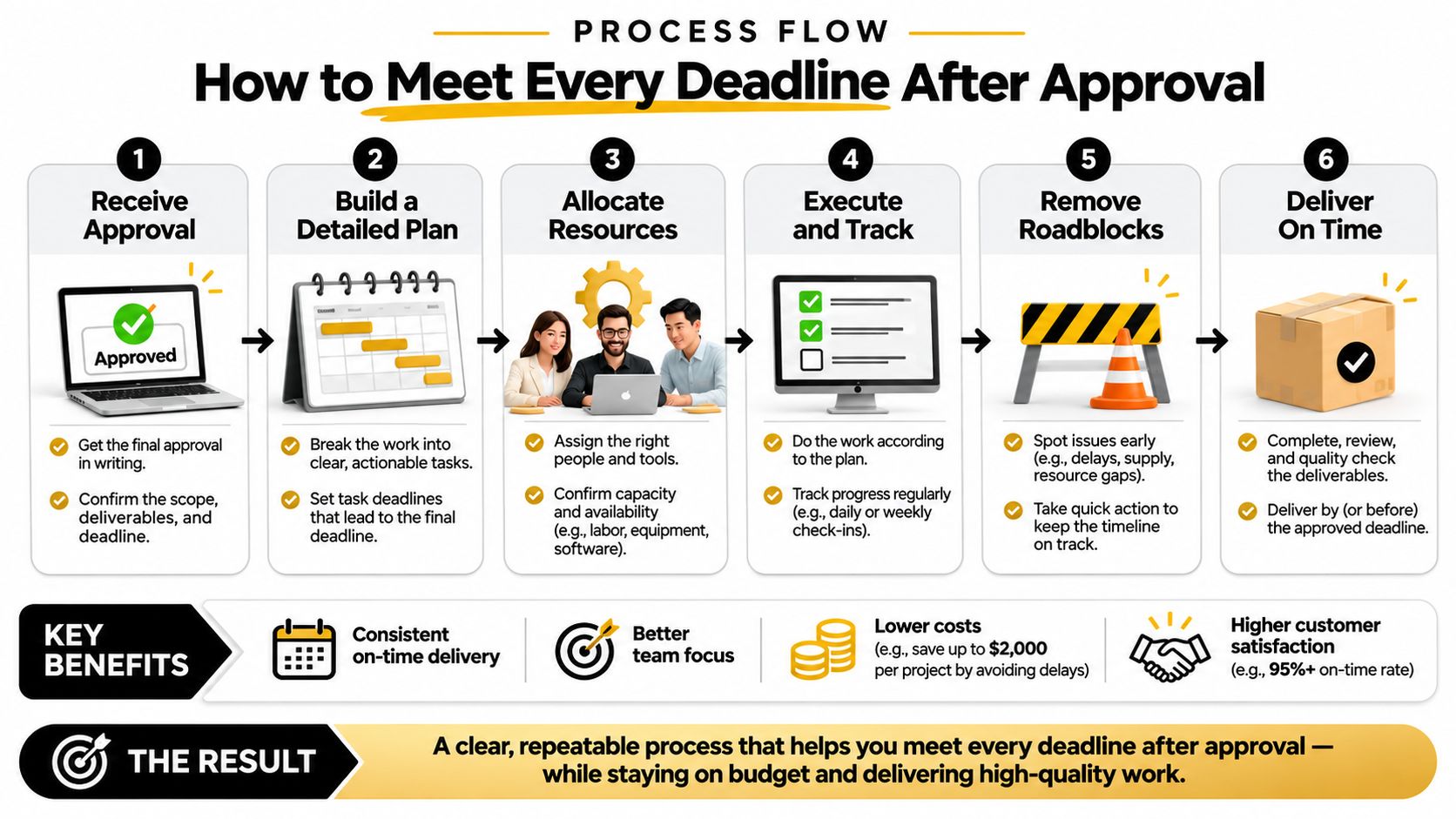
A Notice of Allowance is not a registration certificate. It means the application has reached a stage where you must either establish qualifying use or request more time. The USPTO's trademark process guidance sets a six-month deadline for filing a Statement of Use or a first extension request after the notice, with up to 36 months available through five extensions.
That period is a commercialization clock, not extra time without obligations. Each extension requires a timely request and a verified statement that your bona fide intent to use the mark continues. Filing before launch can secure a place in the process, but it also starts this clock. A clear application scope and a workable launch plan help reduce the risk of paying to extend while correcting identification problems or preparing to refile.
Before the Notice of Allowance, respond to any examiner office action within the response period stated in the notice. An intent-to-use filing does not guarantee approval. To distinguish an application milestone from completed registration, review what trademark registration means.
Turn the notice into an operating calendar
Record the issuance date immediately. Calculate post-allowance deadlines from the Notice of Allowance, not the application filing date. Save the notice with the calendar entry so the date can be checked.
Set advance reminders. As an internal practice, schedule reminders sixty and thirty days before each deadline. Assign a responsible person and a backup, rather than assuming someone will notice a message in a shared inbox.
Review launch readiness quarterly. Check each item in the identification of goods and services. Inventory arriving at a warehouse, a website going live, and qualifying trademark use are different events.
Prepare the Statement of Use when use is ready. Gather specimens for every relevant class and check that the owner, mark, and identified goods or services match the application. Evidence for one product does not support a declaration of use for other listed products that have not launched.
Request an extension if you are not ready. File the required fee and verified statement that your bona fide intention continues. Check the requirements for each later request instead of copying an earlier submission without review.
Reassess before each further extension. Confirm the launch remains genuine and achievable. If the product range has changed, address unused items rather than letting the application drift from the business plan.
Leave time for review. File only after real use begins, and allow time to check that your evidence is complete. Waiting until the final day can leave no time to correct a problem.
What happens when the launch slips
The USPTO's Basic Facts booklet explains that failure to file a Statement of Use or a timely extension within the applicable period causes abandonment. A delayed manufacturer or unfinished website does not extend the deadline.
Practical rule: If launch is delayed, prepare and file an extension before the deadline rather than rushing an unsupported Statement of Use.
Review ownership changes in advance, too. An intent-to-use application generally cannot be assigned before an Amendment to Allege Use or Statement of Use is filed, except to a successor to the relevant ongoing business. A transfer between founder-controlled entities should not be assumed harmless.
Keep filing, examination correspondence, publication, Notice of Allowance issuance, every extension deadline, and the final cutoff on one docket. Track launch milestones alongside those legal dates so the product team can see when a delay may require a trademark decision.
What Counts as Proof of Real Use
A polished website doesn't automatically establish use in commerce. Neither does a social account, packaging mockup, or internal announcement. The USPTO explains that registration requires evidence of use and identifies questionable specimens as a source of additional examination work in its explanation of trademark fee changes.
The central question is whether the evidence shows the mark functioning in the marketplace for the identified goods or services. Supporting business records help establish what happened, but not every invoice or contract is itself an acceptable specimen.
| Business type | Strong evidence | Weak evidence |
|---|---|---|
| Physical product | Dated invoice plus a photograph of actual packaging or a label showing the mark | Label draft or product mockup |
| Downloadable software | Public checkout page showing the mark, supported by download records | Beta page or private pilot access without evidence of qualifying use |
| Software as a service | Live sign-up page tied to the service, supported by paid subscription and delivery records | Waitlist or landing page for an unavailable service |
| Professional services | Client contract or invoice naming the service, plus client-facing marketing showing the mark | Advertising the company without actually rendering the identified service |
Separate launch activity from customer use
A public sales offer and a private pilot require different scrutiny. A public page may help show how customers encounter the brand, but it doesn't eliminate the need for actual qualifying commerce. Private pilot access shouldn't be treated as automatically sufficient or automatically disqualifying; what customers receive and how the mark is used matter.
Downloadable software and subscription software also need different evidence. For a downloadable product, preserve the customer-facing download or purchase experience. For software as a service, preserve materials directly connecting the mark to the service customers access.
Advertising creates another common misunderstanding. A consultancy may use advertising as evidence of its consulting services when those services are rendered. Advertising its own consultancy doesn't mean it provides advertising services to others.
Preserve the transaction and the customer experience
Say a software founder publishes a beta page and collects a waitlist. That shows preparation, not necessarily delivery of the identified software offering. A founder with functioning customer access, subscription records, and dated screenshots has a more complete factual record to evaluate.
Capture evidence when commercial use begins. Save invoices, checkout records, shipment records, client-facing materials, and screenshots showing the mark beside the relevant offering. Preserve webpage addresses and capture dates with the files.
Could a customer obtain the identified offering today, and could you prove what they received? Use that as an operational check, not as a substitute for reviewing the legal use requirements.
Filing Early Versus Waiting for Launch

A business with a brand name, products in two classes, and a planned launch next spring faces a timing choice. Filing before launch may secure an earlier filing position, while waiting avoids paying application costs before the offering is settled. The right choice depends on whether the business can describe its planned goods accurately and has a credible path to market.
| Path | What it secures | Main cost or risk |
|---|---|---|
| File now with fixed goods | An earlier filing position, with priority contingent on registration | Base fees by class, later use-filing fees, and extensions if launch slips |
| Wait until launch | Defers filing expense and allows a use-based application if requirements are met | Another applicant may file a confusingly similar mark first |
| File a broad list for future ideas | A claimed scope that is useful only where genuine intent supports it | Unsupported claims create risk; unused items require deletion or division, and refiling may be needed |
Compare the entire investment
For this hypothetical two-class business, the base application and eventual use filing total $1,000 in government fees. An extension adds $250, calculated from the fee schedule identified earlier. These figures do not cover legal work, additional application charges, or corrective work.
The application starts a commercialization clock: the business must eventually submit evidence of use or manage extensions, rather than treating filing as a one-time step. Filing early can preserve an earlier position, but it also starts the clock before sales begin. Waiting may avoid that pressure, yet delay can leave another applicant room to file a similar mark first.
Precision affects the cost. The USPTO introduced additional charges for incomplete applications, custom identifications, and lengthy descriptions. A broader list is not automatically better value. If items are unsupported or never offered, they may need to be deleted or divided, and refiling can add work without recovering what was already spent preparing and prosecuting the application.
Decide using operational facts
- Product stability. Can you describe what you plan to sell without unresolved product decisions?
- Specimen readiness. Can you identify the packaging, sales page, or service material customers will encounter?
- Financial runway. Can you fund the later use submission and a possible extension?
- Clearance pressure. Are similar names appearing in your market, making delay more consequential?
Waiting can make sense while the offering is still taking shape. A name search and a clear view of how the mark fits your brand identity beyond the logo can help you avoid committing to an inaccurate scope. A business name and a product brand may serve different purposes, so consider whether you need to trademark your business name rather than assuming both need identical treatment.
File early when the goods are defined, the name is cleared, and the launch plan is credible. If the product remains unsettled and clearance reveals no immediate concern, waiting may be reasonable, but it carries priority risk and does not stop the commercialization clock once you file.
Put Your Intent-to-Use Filing on a Safe Path
A sound intent to use trademark application connects a real business plan to a manageable proof-of-use process. Before filing, assemble a working file that someone else could understand without relying on your memory.
Your pre-filing and launch checklist
- Document genuine intent. Use the dated development, supplier, marketing, and budget records described in the eligibility discussion.
- Choose accurate classes. Match the application to the goods or services you plan to offer.
- Clear the name. Search before committing to packaging, signage, or a public launch.
- Record the filing. Save the submitted application and verify the owner, mark, and identification.
- Prepare the docket. Assign responsibility for recording the Notice of Allowance and managing subsequent deadlines.
- Connect launch to the available runway. Schedule development, inventory, delivery, and evidence review together.
- Preserve real-use evidence. Capture customer-facing materials and transaction records as commercial activity begins.
If you want a second set of eyes before filing, we offer trademark clearance, registrability guidance, class selection, USPTO application filings, and office action responses. Our trademark services also include Florida state applications and renewal management, allowing the filing decision to fit a broader protection plan.
Website content is informational only and isn't legal advice. No attorney-client relationship is formed without a signed agreement.
Coto & Waddington, Attorneys at Law helps founders evaluate trademark clearance, select appropriate classes, and prepare USPTO filings and office action responses. Before committing to an intent-to-use application, visit Coto & Waddington, Attorneys at Law to book a consultation, and bring your proposed name, product list, launch schedule, and any existing application notices.