Many people search for summary administration forms Florida because they want the fastest possible probate path. That instinct is understandable, but the risky part is assuming a form packet is the process. In Florida, summary administration is still a statutory court proceeding, and the court order depends on eligibility, creditor treatment, and clean documentation, not just a neatly filled-out petition.
Families often get tripped up by the gap between the statewide rule and the county packet they found online. Florida's statute sets the legal framework, but local clerks and court packets don't always speak with one voice, which is why a simple download can become a filing delay. A better approach is to treat the forms as one piece of a larger legal task, the same way you'd use a guide to handling probate tasks to organize the practical work after a death, not as a substitute for legal review.
If you're also trying to understand whether probate can be avoided entirely, the rules around transfers, titling, and estate planning matter just as much as the filing packet. For that reason, it helps to compare the probate route with options discussed in this Florida probate avoidance overview before you commit to a filing strategy.
Table of Contents
- The Hidden Risks of Simplified Probate
- Determining Eligibility and Navigating County Form Mismatches
- Assembling the Required Probate Documents
- Managing Creditor Claims and Diligent Searches
- When to File Pro Se Versus Hiring a Probate Attorney
- Your Pre-Filing Checklist and Next Steps
The Hidden Risks of Simplified Probate
Simplified doesn't mean informal
Summary administration is called “simplified” because it skips some of the heavier machinery of formal probate, not because it's casual. The estate still has to qualify under Chapter 735, the petition still has to be verified, and the court still has to issue an order before assets can be transferred. Florida's probate code places summary administration in Chapter 735, Part I, the small-estates portion of the Probate Code, and the chapter index ties the process to the petition, distribution, and creditor-notice provisions that drive the case. Florida Statutes Chapter 735, Part I
That's why a clean-looking packet can still fail. If the asset values don't line up, if a beneficiary's signature is missing, or if the creditor analysis is thin, the clerk or court may push back. In practice, that can mean amended papers, lost time, or a distribution that later gets attacked by a creditor.
Practical rule: if the petition looks complete but the supporting facts aren't, the paperwork isn't complete enough.
The real risk sits in the gaps
The danger isn't only rejection at filing. A family can receive an order and still face later claims if known or reasonably ascertainable creditors were not handled correctly. Florida's framework requires diligence before entry of the order, not after the assets are already out the door. That is where DIY filings often get overconfident, because the form itself can look orderly even when the estate facts aren't.
A summary administration petition is a legal statement about the estate, not a cover sheet. If the information underneath it is incomplete, the order may be vulnerable. The safest mindset is to treat the petition as a sworn court document that needs the same care you'd give a settlement agreement.
Determining Eligibility and Navigating County Form Mismatches
The two statutory paths
Florida summary administration has two separate eligibility routes. The value-based route applies when the entire Florida estate subject to administration, after exempt property is removed, does not exceed $150,000 under Florida Statutes § 735.201. The time-based route applies when the decedent has been dead for more than 2 years, even if the estate exceeds that dollar amount.
The two-year route can change the filing strategy for an estate that is not small by value. It does not resolve title defects, creditor questions, or disagreements over ownership. It creates a separate statutory basis for seeking summary administration.
The threshold question is not whether you found a form. It is whether the estate qualifies under the statute.
Why the county packet can mislead you
A serious filing risk is the conflict between Florida's statewide statute and outdated county materials. Florida law uses $150,000, yet Miami-Dade's summary administration checklist still describes $75,000. A family that searches by county, downloads a packet, and treats its wording as controlling can reject an otherwise available filing route before reviewing the governing law.
Compare the county's cover sheet and instruction page against Chapter 735 before signing anything. The local packet controls filing mechanics, such as formatting and submission procedures, but it cannot change the statutory eligibility rule.
The mismatch becomes harder to address when the estate includes an LLC interest, closely held shares, digital property, or out-of-state real estate. Those assets may not fit neatly into a basic worksheet, and their value or ownership may require records beyond a bank statement. A packet that looks complete can still omit the facts needed to support the petition. For a practical overview of the broader process, review this Florida probate process guide.
Count the assets the right way
Begin with the Florida property subject to administration, then account for property exempt from creditors' claims. That calculation can determine whether the value-based route is available. Business interests and mixed or out-of-state assets deserve particular care because an incorrect valuation can place the estate in the wrong filing track.
Use these checks before relying on a county packet:
- Confirm venue first: file in the proper Florida probate county, not the county where the form was found.
- Check the date-of-death facts: the two-year route stands apart from the value-based route.
- Verify how assets are titled: business interests and out-of-state property may require closer review than ordinary deposit accounts.
- Read the local instructions closely: determine whether the packet is current, county-specific, or based on outdated language.
If the packet and the statute conflict, the statute controls legal eligibility. The packet still matters for filing mechanics, but it does not rewrite Chapter 735. A probate attorney can be useful when business assets, disputed values, creditor exposure, or inconsistent county instructions make a downloadable form look simpler than the estate is.
Assembling the Required Probate Documents
Build the packet before filing
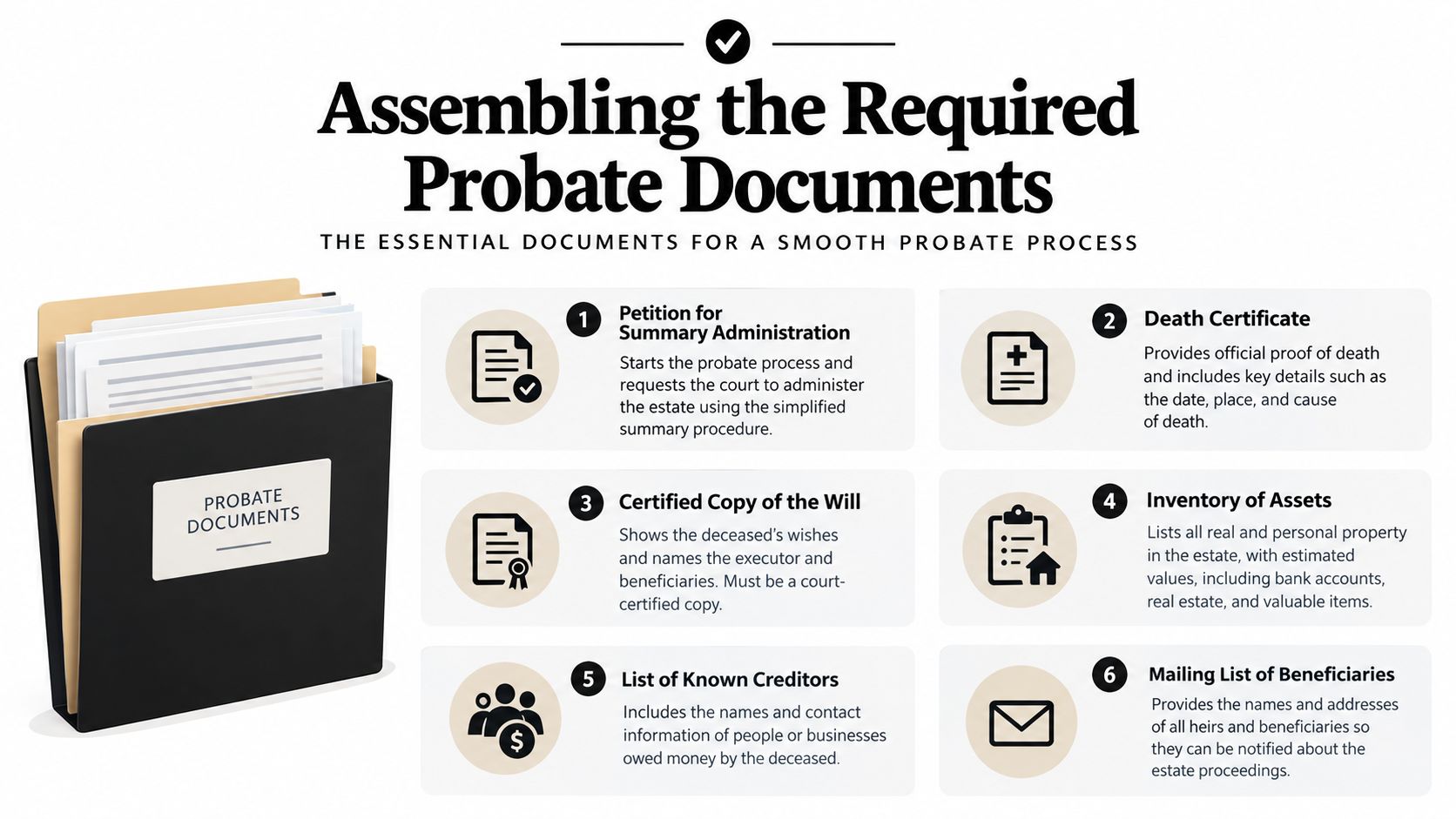
A petition alone will not produce a summary administration order. The filing generally requires a verified petition, the death certificate, the original will when the estate is testate, and usable information about assets and debts. A self-proving will may reduce authentication work, but the court still needs the original instrument and whatever supporting records the clerk or judge requires. The statutory petition requirements are outlined in Florida summary administration petition requirements.
The packet also needs a proposed distribution. The order must identify where the property goes, and that proposal must agree with the estate facts and the beneficiaries' required consents. A county form packet can look complete while omitting information needed to explain a business interest, an uncertain valuation, or property held outside Florida.
Signatures require separate attention
Florida law allows a beneficiary or a person nominated as personal representative to file. The surviving spouse and beneficiaries generally must sign and verify the petition, subject to the statutory rules governing joinder. A beneficiary receiving a full distributive share under the proposed distribution may not need to join, while an absent, unreachable, or unwilling beneficiary can make a supposedly simple filing much harder.
Check the signature requirements separately from the document list:
- Identify every required signer: confirm the surviving spouse, beneficiaries, petitioner, and any person nominated as personal representative.
- Match names and capacities: use consistent legal names and state whether each person signs as a beneficiary, spouse, petitioner, or other interested party.
- Confirm verification: each required verification and signature must be completed in the form and manner the court accepts.
- Test joinder before filing: determine whether a beneficiary receiving a full share is excused or whether that person must sign, and document the basis for the decision.
A estate planning documents checklist can help organize records that often become relevant after death, even though probate may require additional court-specific documents.
Useful habit: keep certified copies, signed joinders, verifications, and asset schedules in one master file before filing.
Make the court packet internally consistent
Clerks often return petitions for ordinary errors: a missing value, an inconsistent beneficiary name, or a proposed distribution that does not match the petition. Those corrections delay administration and can expose deeper problems when the estate includes creditor claims or business assets.
Review every page against the same source records. The names, ownership details, valuations, signatures, and requested transfers should tell one consistent story without requiring the clerk or judge to call the family for clarification.
Managing Creditor Claims and Diligent Searches
Creditors can't be treated as an afterthought
Florida requires a diligent search and reasonable inquiry for known or reasonably ascertainable creditors before the court enters the order. That means the family has to look for debts, not just wait for them to appear. Known creditors must be served with the petition, and the petition has to provide for payment to the extent assets are available. Florida summary administration creditor procedure
Summary administration becomes more than a form download once you reach this stage. If contingent liabilities are omitted or the creditor search is undocumented, the distribution can unravel later. Beneficiaries who already received property may end up dealing with claims that should have been addressed before the order was entered.
Search like a practitioner, not like a guesser
A proper creditor review should be documented, even in a modest estate. That means checking mail, reviewing statements, looking at recurring payments, and asking whether any bills, lawsuits, or account notices suggest open exposure. If the decedent had a business, the creditor picture can be more complicated because obligations may sit behind accounts payable, guarantees, or vendor relationships.
When locating heirs or tracing claimants becomes difficult, specialized locating services can be useful in the right case, including UK tracing agents where an interested person or creditor may be overseas. That's not a substitute for legal analysis, but it can help fill in missing contact information when the estate facts are messy.
If the creditor list is vague, the estate isn't ready to distribute.
The two-year route doesn't erase this reality. Waiting longer can satisfy one eligibility path, but it doesn't magically clean up title issues or eliminate the need to document how the assets will move. Families sometimes hear “two years” and think the rest of the process becomes automatic. It doesn't.
When to File Pro Se Versus Hiring a Probate Attorney
Straightforward cases can be manageable
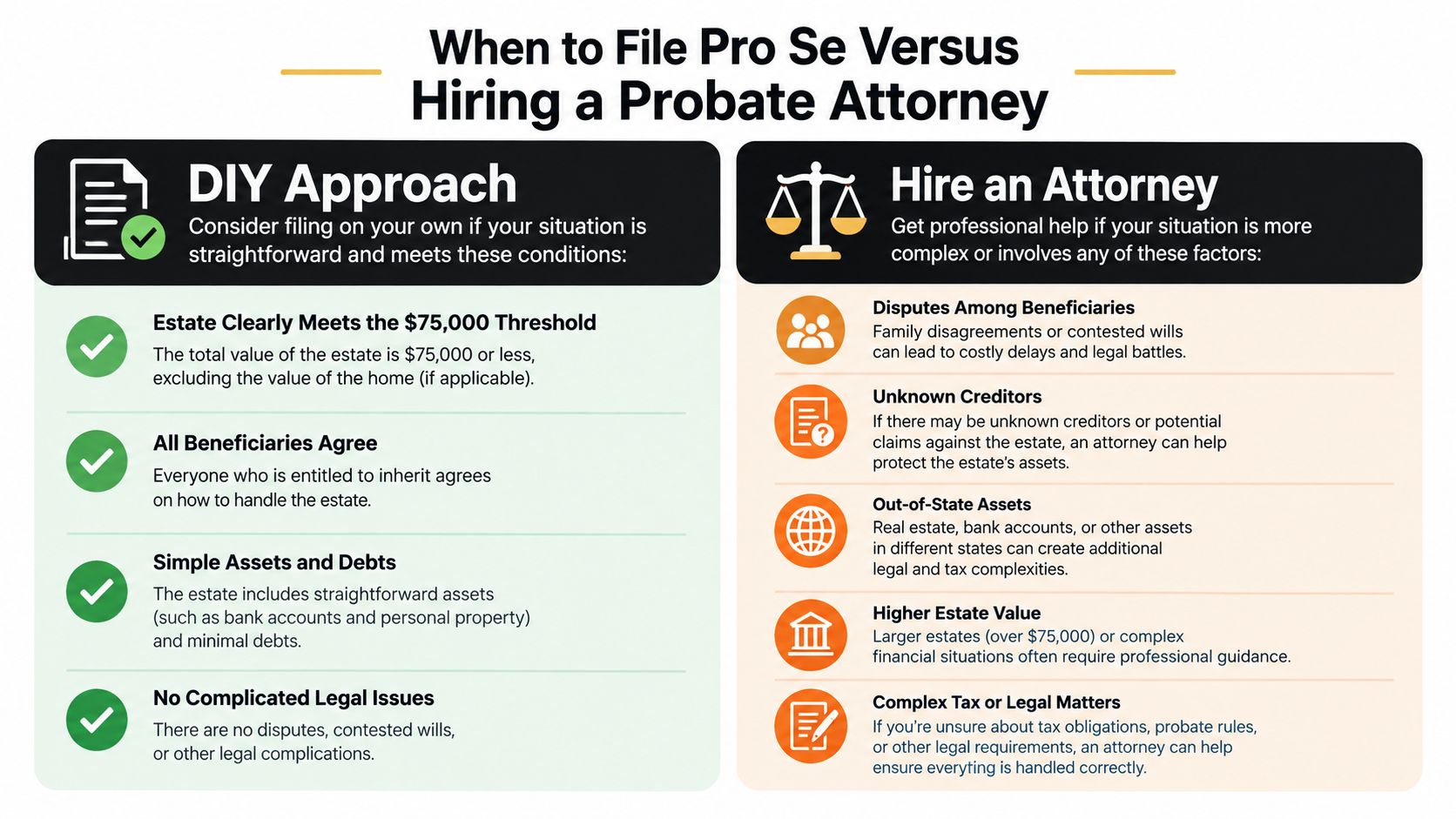
A family may be able to handle summary administration without counsel when the estate clearly qualifies, the beneficiaries agree, the asset list is clean, and there are no unusual title issues. In those situations, a careful filer can gather the documents, prepare the petition, and submit the order with less friction. If the estate is modest, the heirs are organized, and the creditor picture is clear, DIY filing can work.
That said, “can work” is not the same as “should be done casually.” Even uncomplicated estates still require the right venue, accurate values, and a clean distribution plan. A mistake that seems small at filing can matter later when a bank, title company, or beneficiary asks for proof.
Red flags that call for counsel
The case for hiring a probate attorney gets stronger when any of these appear:
- Uncooperative heirs: one beneficiary won't sign or can't be located.
- Disputed debts: creditors, bills, or liabilities aren't fully clear.
- Non-self-proving wills: the will may require extra proof or create filing friction.
- Business interests: LLC units, closely held shares, or other ownership rights need valuation.
- Digital assets or outside property: the estate includes property with complicated access, valuation, or situs issues.
For teams that need document support while a lawyer handles strategy, a service such as virtual paralegals can be useful in the background, especially for organizing exhibits, correspondence, and filing packets.
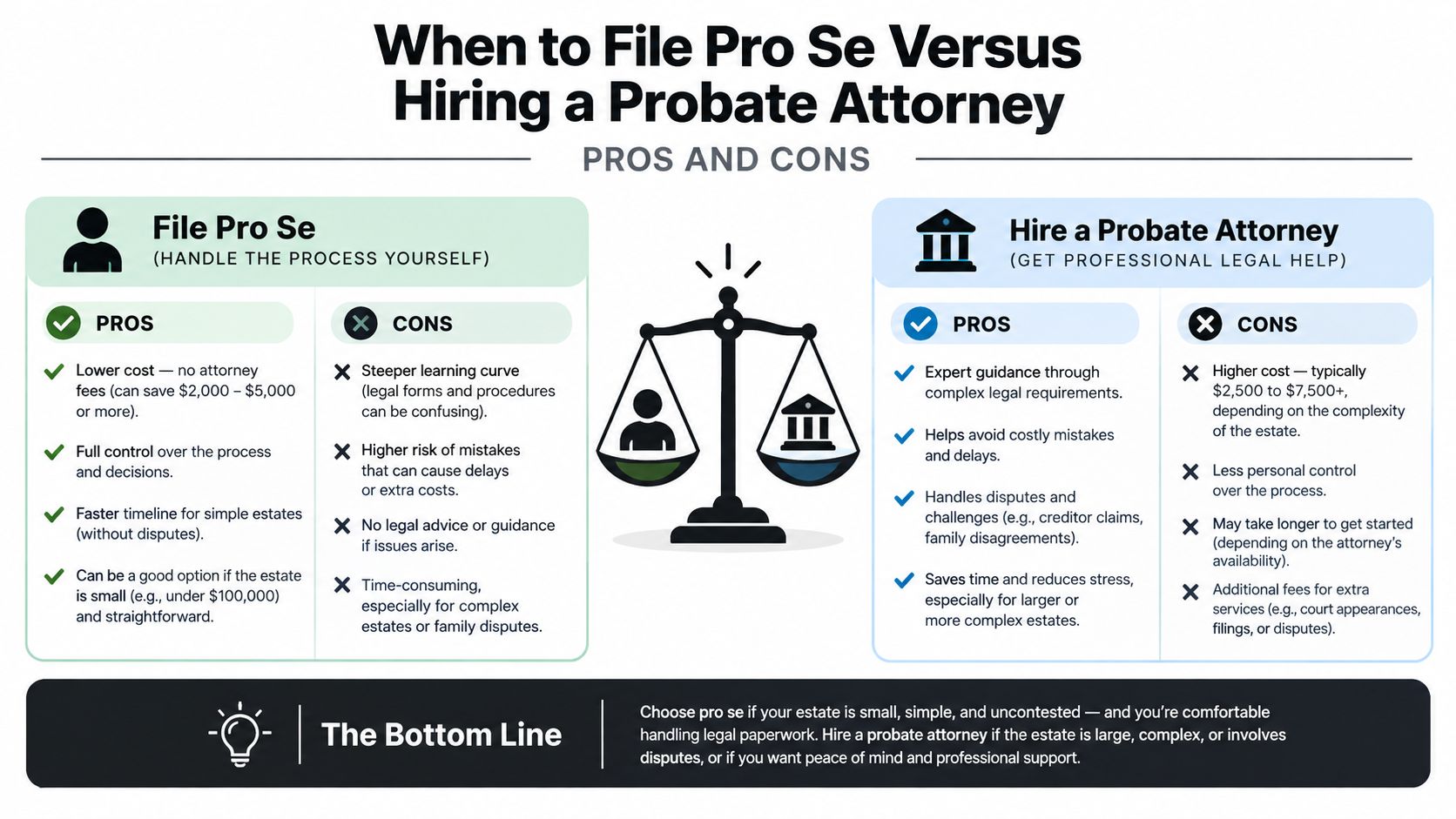
Coto & Waddington, Attorneys at Law handles Florida probate administration, including summary administration, court filings, and distribution issues, which can be helpful when the estate isn't clean enough for a standard packet.
Your Pre-Filing Checklist and Next Steps
The last pass before filing
Before you pay the clerk's fee, confirm the venue, verify that the estate fits the statutory route you're using, and make sure every required signature and joinder is in place. Recheck your asset values, especially if the estate includes business interests or mixed property. Then confirm that your creditor search is documented and that the proposed distribution matches the paperwork exactly.
A short final review can save weeks:
- Venue confirmed
- Eligibility confirmed under the statute
- Assets and debts listed consistently
- Beneficiary signatures secured
- Creditor search documented
- Proposed order prepared
If any of those items are shaky, pause before filing. The cheapest packet is not the best packet when the estate has disputed facts, out-of-state property, or family friction.
Families in South Florida often need more than a download because the local packet, the statute, and the actual asset picture do not always line up. When that happens, specialized probate counsel is worth the call.
Coto & Waddington, Attorneys at Law helps families and business owners handle Florida probate matters with practical, modern counsel, including summary administration filings and distribution issues. If your estate has creditor concerns, business assets, or county form confusion, visit Coto & Waddington, Attorneys at Law to get guidance that fits the facts of your case.